
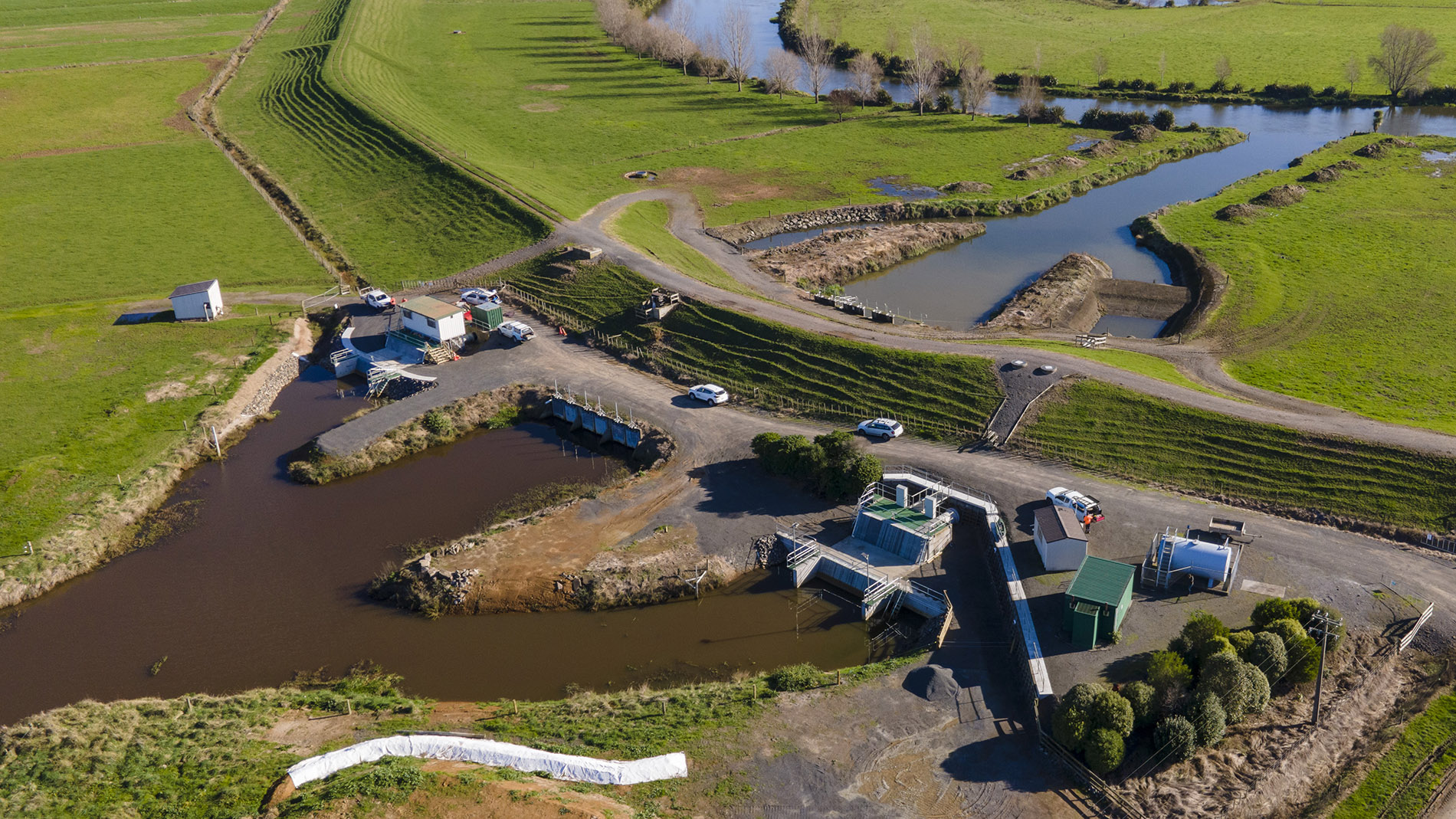
The Roger Harris (Waihou Valley Scheme) Scholarship is available to students whose families are ratepayers within the Waihou Piako zone rating area and who are undertaking tertiary study in civil engineering or resource management, with a focus on flood protection and/or river and catchment management. The scholarship provides up to $6,000 towards the cost of university fees.
Applications are open
To apply, submit a CV that includes:
- your qualifications
- copies of your NCEA Level 1, 2 and 3 results from NZQA
- details of extra-curricular activities and other information that demonstrates your skills and attributes.
Applications will close on 12 February 2027.
How to send your application
Email it (use the link), or post to:
Chief Executive Officer
Waikato Regional Council
Private Bag 3038
Waikato Mail Centre
Hamilton 3240
Please mark your envelope Roger Harris Scholarship Application.

Scholarship information
Eligibility
- Students must be studying civil engineering or resource management, with a focus on flood protection and/or river and catchment management.
- Students must have family living and paying rates within Waikato Regional Council’s Waihou or Piako rating zone. This generally includes landowners with property around Thames, Ngātea, Paeroa, Waihi, Te Aroha, Morrinsville, Matamata, Tīrau and part of Putāruru..
Selection panel
Chairperson and local elected members of the Waikato Regional Council.
Term of scholarship
One year. Consideration may be given for an extension of one further year, subject to other applications received and satisfactory study progress.
Scholarship value
Up to $6,000 towards university course fees.
Roger Harris and the Waihou Valley Scheme
The Roger Harris (Waihou Valley Scheme) Scholarship honours the late Roger Harris, who served as chief engineer for the then Hauraki Catchment Board from 1959 to 1983. He played a key role in the development and early implementation of the Waihou Valley Scheme, a major river and catchment management scheme on the eastern Hauraki Plains and Thames Valley.
Today, the scheme includes infrastructure worth almost $130 million and covers a catchment of approximately 220,000 hectares. It enables around 50,000 additional hectares of land to be farmed safely.