Exhibition highlights efforts to protect and restore Hauraki Gulf
| Published: | 09/09/2026 |
Waikato Regional Council and the Department of Conservation are encouraging people to learn about the challenges facing the Hauraki Gulf/Tīkapa Moana and actions underway to protect and restore one of New Zealand's most important marine ecosystems.
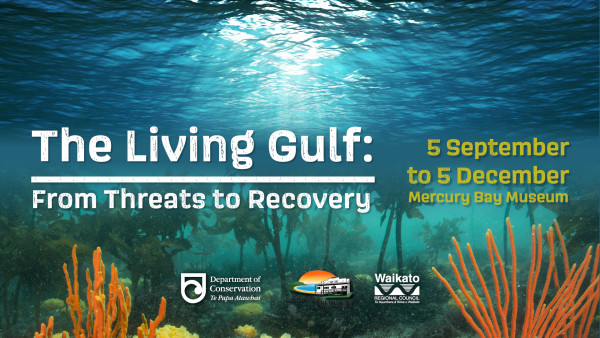
The Living Gulf: From Threats to Recovery exhibition, on display at Mercury Bay Museum until 5 December 2026, highlights marine biosecurity and marine protection areas as part of efforts to help improve the health and mauri of the Hauraki Gulf. The exhibition includes information boards, video, interactive touchscreen displays and marine biosecurity specimens.
Covering more than 1.2 million hectares, the Hauraki Gulf Marine Park supports an extraordinary diversity of marine habitats and species, including kelp forests, shellfish beds, seagrass meadows, fish species, marine mammals and internationally significant seabird populations.
The Gulf supports recreation, tourism, fisheries, aquaculture and the wellbeing of tangata whenua and coastal communities. However, like many marine environments around New Zealand, its health has declined over time due to increasing pressures from both land and sea-based activities.
Marine biosecurity helps prevent invasive marine pests from damaging habitats, displacing native species and affecting fisheries, aquaculture, recreation and cultural values. Waikato Regional Council’s dive surveillance programme supports early pest detection and timely management responses.
Marine protected areas help protect and restore biodiversity by reducing pressures from human activities on vulnerable species and habitats. The Department of Conservation (DOC) manages these areas and is tracking the effectiveness of different types of protection through an ongoing programme of monitoring via diving and underwater cameras.
"The Hauraki Gulf is an iconic marine environment that supports remarkable biodiversity and holds deep cultural significance,” says DOC Marine Community Ranger Rosa Hunt.
“While the ecosystem is under strain, we’re also seeing positive signs of recovery. For example, in some areas large predators such as kōura (crayfish) and tāmure (snapper) are rebounding and keeping urchin populations down. This is leading to healthier kelp forests which rebalances the ecosystem.”
"Preventing invasive marine pests from establishing is one of the most effective ways we can help protect the Hauraki Gulf,” says Waikato Regional Council Marine Biosecurity Officer Dave Pickering.
“Through ongoing surveillance and monitoring, we're helping safeguard the native species, habitats and values of this special marine environment."
The exhibition also highlights the importance of collective action in protecting the Gulf.
“Protecting the Hauraki Gulf is something we all have a role in. Whether you’re boating, fishing, diving, swimming or exploring the coast, there are simple actions you can take to help protect the Hauraki Gulf.”
Exhibition details
What: The Living Gulf: From Threats to Recovery
Where: Mercury Bay Museum, Whitianga
When: 5 September to 5 December 2026
Presented by: Mercury Bay Museum in partnership with the Department of Conservation and Waikato Regional Council