
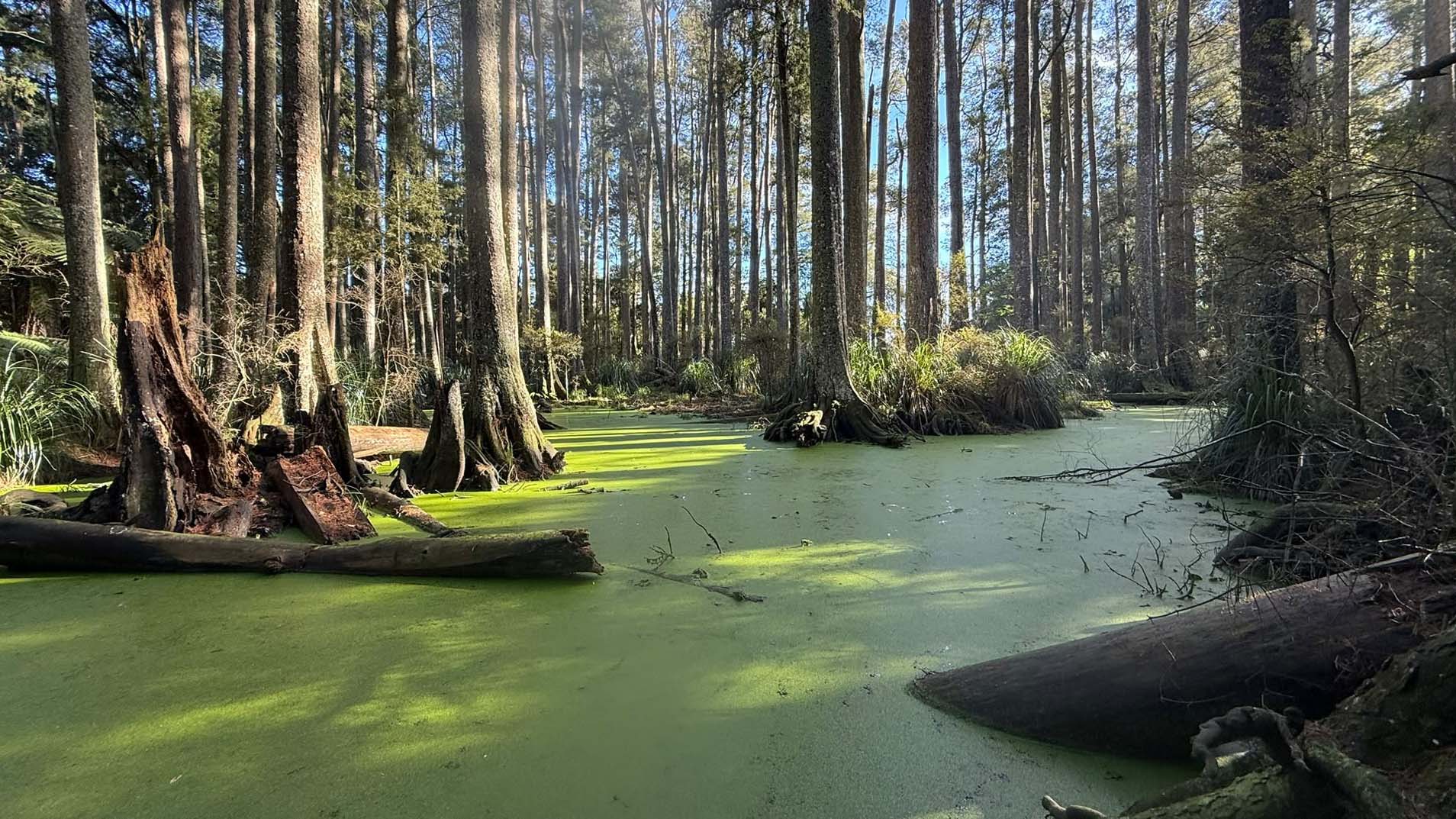
"People think a forest is the canopy, but it's so much more than that. It's an interdependent ecosystem of plants, animals and insects that has everything its inhabitants need to survive."
Jude Tisdall, Trustee and volunteer, Piako Waihou Catchment Trust
When a 150-year-old remnant kahikatea forest is protected and restored, you're safeguarding something that cannot be quickly recreated.
That’s an insight Jude Tisdall once took from a workshop led by a New Zealand ecologist, who posed a simple question: if you had only a small amount of money to spend on restoration, where would it have the greatest impact?
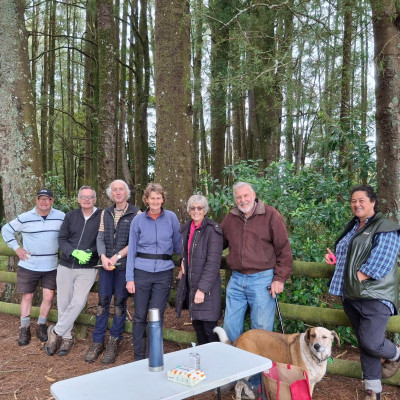
Jude Tisdall (middle) and other Piako Waihou Catchment Trust volunteers at Hawes Bush, one of the remnants being restored and protected as part of the Connecting the Waitoa project.
A remnant kahikatea forest has ecological assets that you can’t buy, explains Jude, a trustee and volunteer of the Piako Waihou Catchment Trust.
“The mature canopy is important because it provides a level of resilience that would otherwise take generations to develop,” Jude says.
“It creates shade, suppressing weeds and maintaining forest conditions, meaning the ecosystem can recover much faster than a newly planted site.
“If you remove pressures such as livestock grazing, transformational weeds and pest animals, and reintroduce understorey species that have been lost over time, these remnants can recover surprisingly well.
"People think a forest is the canopy, but it's so much more than that. It's an interdependent ecosystem of plants, animals and insects that has everything its inhabitants need to survive.”
Kahikatea forest was once the dominant forest type across much of the Waikato's lowland wetlands and floodplains, covering about 200,978 hectares.
But with human settlement, roughly 98.5 per cent was cleared for agriculture and urban development. Today, only about 3,965 hectares remain, scattered across the landscape as small, fragmented remnants surrounded by farmland. More than half are smaller than one hectare.
A retired veterinarian, Jude became involved in restoring kahikatea remnants after becoming frustrated with privet spreading on her lifestyle property in Kiwitahi, about 15 years ago.
Today, much of her work is undertaken through the Piako Waihou Catchment Trust’s Connecting the Waitoa project, which protects and restores remnant kahikatea forest fragments on private land along the Waitoa River.
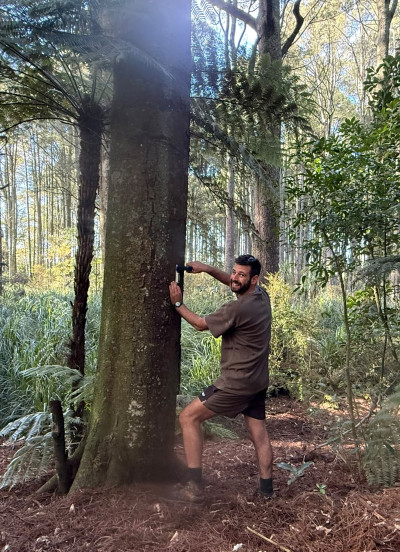
David Crimp, project manager of Connecting the Waitoa, installing one of the traps supplied by Waikato Regional Council.
Connecting the Waitoa has recently received support from Waikato Regional Council’s Priority Biodiversity Sites programme to strengthen pest animal control across six remnants.
As a threatened ecosystem that has been disproportionately destroyed and modified, all remnant kahikatea forests are considered priority biodiversity sites, and the programme supports landowners and community groups to restore and protect biodiversity on private land throughout the Waikato region.
The council has supplied traps and bait strikers for the project, funded the labour to install them and for baseline pest monitoring, and is providing bait and trap lure for the pest control network for two years, at a total cost of about $16,500.
The trust, which relies largely on volunteers to undertake its restoration activities, will service and maintain the traps and continue building the network into the future.
“We’d been a bit guilty of not doing pest animal control properly in the past,” Jude says.
She says until now, much of the group’s effort had focused on controlling pest plants and collecting seed from native species that have become scarce in many remnants.
Privet, English ivy and tradescantia are weeds that can dominate the understorey, making it difficult for the next generation of forest species from establishing.
The trust collects seed from healthier remnants where species such as tūrepo, oak-leaved toropapa, thin-leaved coprosma and poataniwha still survive. The plants are grown for the restoration project, helping rebuild a diverse and self-sustaining forest ecosystem.
“We dabbled in pest animal control a bit, a half-arsed effort, but it was hard enough dealing with the understorey weeds let alone pest animals without funding.
“So, in the end, we approached Waikato Regional Council, and they helped kickstart us off.
“We got a guy in who is an absolute expert on traps – he’d moved back to Walton and was looking for some volunteer work. He got an instant promotion to project manager, so he’s installed all the traps and is looking after them and doing all the monitoring.
“The traps are now in full swing, killing stuff. We’ve been getting piles of possums and rats.”
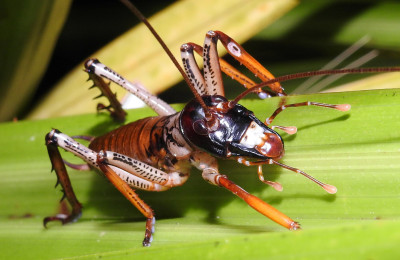
Insects, such as tree wētā, are highly vulnerable to predators such as rats. (Credit: Sara Smerdon)
Without active pest animal and plant management, Jude says many remnants would gradually decline and continue losing biodiversity.
“If we don't look after them, we will lose them. We haven’t got many remnants left in the Piako-Waihou, but what we have is mighty. We need to make sure these stands are vigorous and healthy.”
Jude says she gets a real feeling of accomplishment from restoring the remnants and seeing their transformation.
“We’re seeing a huge amount of plant regen – it’s so exciting seeing new plants pop up – and now we’re wanting to see the birds and insects return.
“I get more excited about the insects, really, because the birds need insects and we won’t see the insects unless we can get good control of rats.
“Healthy canopies, plants, birds, insects, fungi, soil – it’s all about community; everything is connected.”