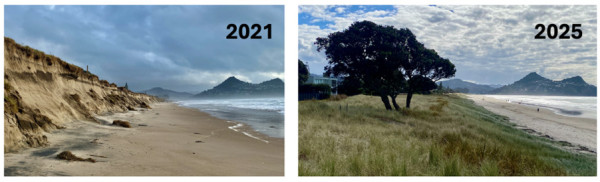
Martin Hopkins and Bruce Burton from the Pāuanui Dune Protection Society credit the coastal town’s revitalised dunes to a successful collaboration.
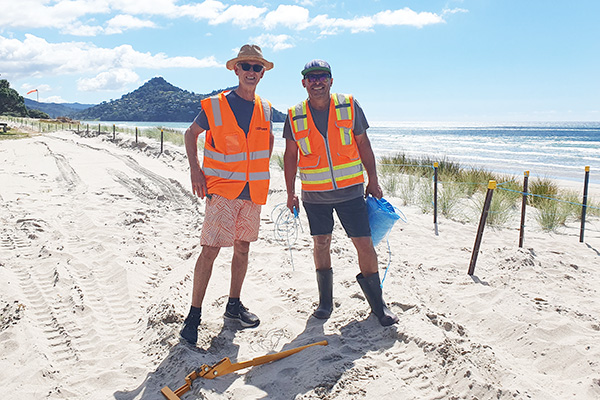
Bruce Burton and Martin Hopkins.
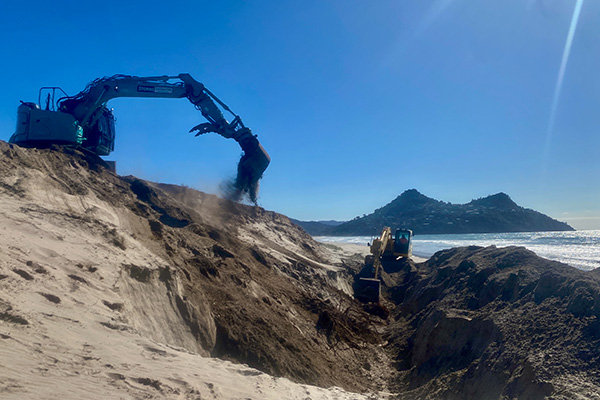
The dunes were widened and shaped into a gentle slope.
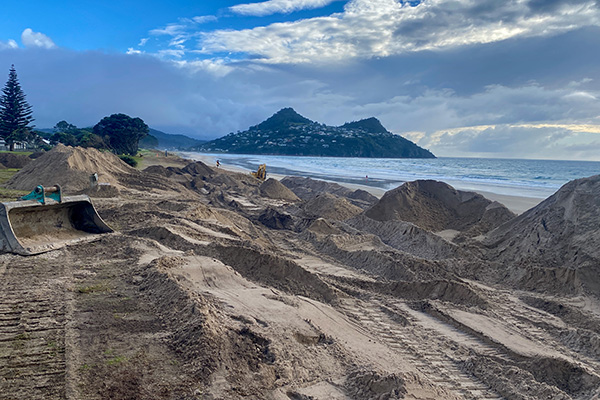
Having a dune with a gentle slope helps absorb storm energy.
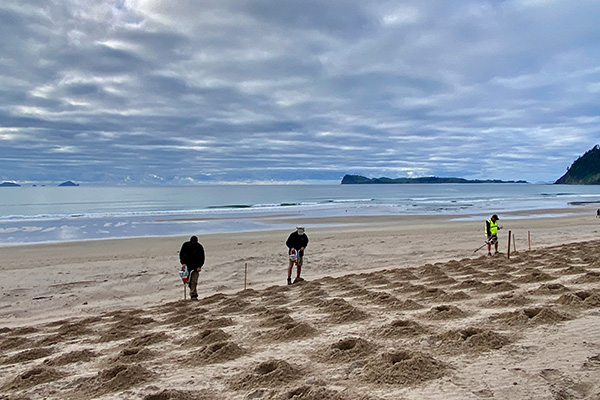
Since May 2022, more than 48,000 sand-binding dune species have been planted.
After the big storms of 2020 and 2021, Thames-Coromandel District Council (TCDC) proposed to reshape the eroded dunes at Pāuanui’s south end into a wider, gentle slope and replant it in native sand-binding species.
Not everyone in the community was convinced. Some residents were reluctant to lose grass from the reserve for the project, while others questioned whether a greater dune system with a gentle 3:1 slope was what was really needed to increase resilience to future extreme weather events.
So, a small group of residents started the Pāuanui Dune Protection Society (PDPS) and decided to dig deeper.
PDPS had one clear goal: to work with TCDC and Coastcare Waikato to restore a natural, self-sustaining dune system along the full length of Pāuanui Beach.
We talked to the coastal experts at TCDC, Coastcare Waikato and the Coastal Restoration Trust, studied the outcomes of other beach restoration projects, and learnt what science says about healthy dunes.
Here’s what we learnt.
- A dune with a gentle slope helps absorb storm energy and rebuilds naturally, while steeper, eroded slopes bounce waves back and make beach erosion worse.
- Most of the plants from past restoration efforts after storms at Pāuanui just got washed away in the next storm, leaving too few survivors to rebuild the dune.
- Having a wider, gently sloped dune area means more plants have a greater chance of survival after a storm event, so they can grow back down the slope to kickstart recovery.
We also realised there was work to do along the rest of the beach.
Many of our dunes were choked with kikuyu, couch and the invasive gazania flower, which smothered native species and stopped them from trapping sand.
Removing these invaders, and in many cases replanting the cleared areas, would be vital to ensuring a healthy cover of sand-binding native species so the dunes can recover naturally after an erosion event.
Today, you only need to walk along Pāuanui’s revitalised dunes to see what collaboration has achieved.
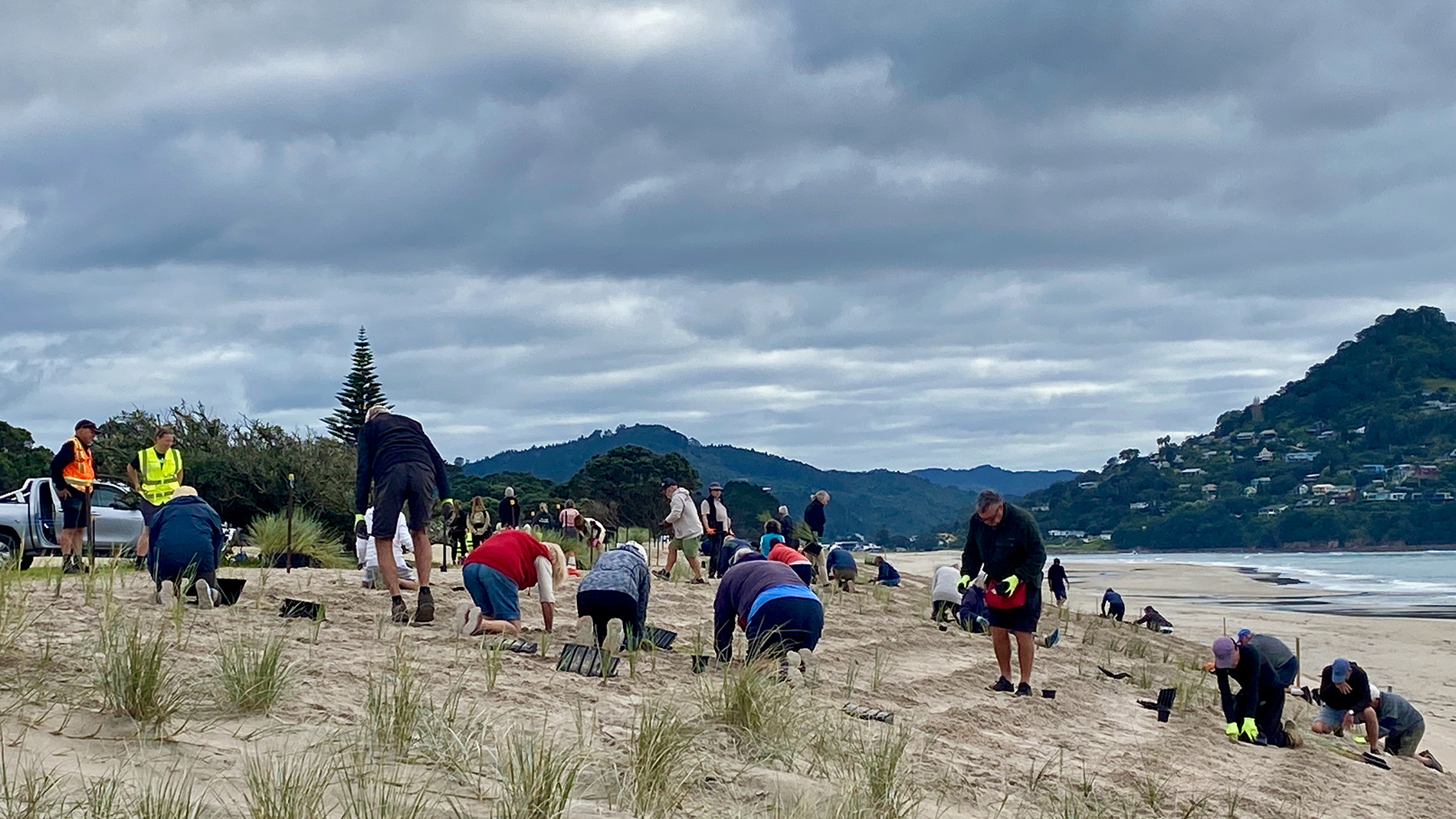
- Community planting and weeding days are highlights for locals of all ages – a chance to get sandy, meet neighbours, and see what teamwork can achieve.
- Over one kilometre of eroded dune face has been reshaped and replanted, with the final 190 metres scheduled for next year.
- Weed-infested dunes are being revived through careful spraying, weeding and replanting – more than 500 metres restored so far, with 700 metres planned over the next two years.
- Since May 2022, more than 48,000 sand-binding dune species have been planted.
- PDPS fundraising has extended work beyond the TCDC/Coastcare Waikato budget, giving residents real “skin in the game” and pride in the results.
Yes, storms will still come, but our dunes now have the best opportunity to naturally recover – well, with a bit of a helping hand along the way.
You, too, can help make a difference by joining your local Coastcare group to take part in planting or weeding events, and by taking some time to learn about how dunes work. The Coastal Restoration Trust of New Zealand has some good reading.
Then you can sit back and marvel at the natural wonder of storm erosion and recovery.
Martin Hopkins and Bruce Burton, Pauanui Dune Protection Society
Before and after
Over one kilometre of eroded dune face has been reshaped and replanted.