


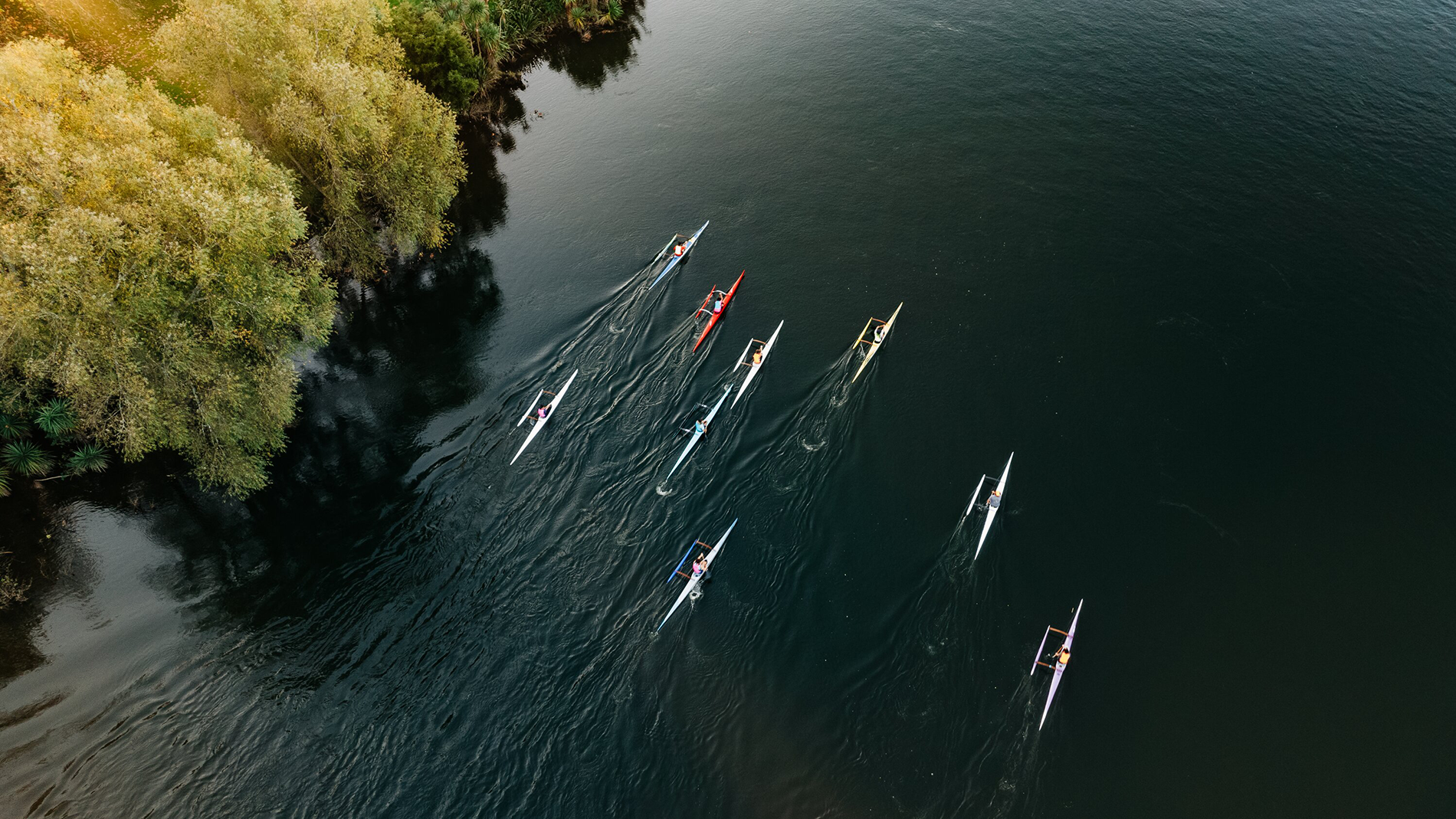
“The intergenerational mātauranga passed down through kōrero tuku iho gives students the knowledge, skills and inspiration to restore and protect the health and wellbeing of their tūpuna awa and moana.”
Waikato Regional Council Kaihāpai Hōtaka Mātauranga Arna Rose Solomon-Banks
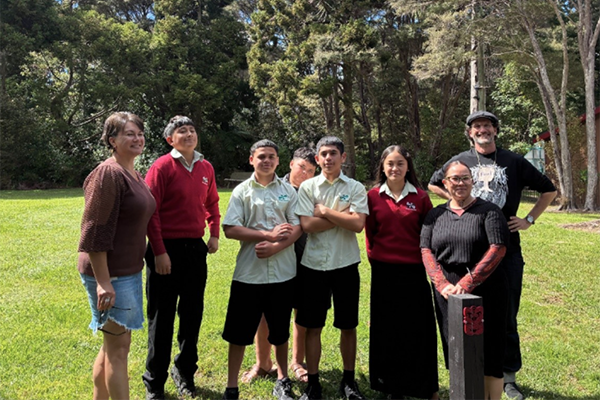
Kaiako Joidene Preston, Cale Dunn, Manaia Reihana, Kaiako Ursula Aitken, NZAEE Co-Chair Paul Murray.
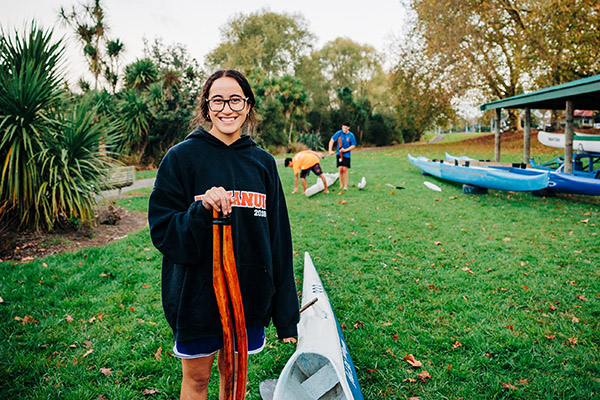
Waikato Regional Council Kaimahi Māori Hinemanu Barclay-Kerr, ready to head out on the awa.
For a group of Tūākau College rangatahi, the Waikato River is much more than a landmark or water source. Building on their existing whakapapa connection to the awa and its stories, through Kura Waitī ki Kura Waitā, they have grown their relationship with and knowledge of this living system.
Over the past year, the Tūākau College River Rangers have swapped screens and classroom walls for waka, wetlands and visits to the awa.
This experience has brought together mātauranga Māori and Western science, giving them practical ways to understand river health, native plants, biosecurity and the connections between the awa and the moana.
The students recently took centre stage at the 2026 New Zealand Association for Environmental Education (NZAEE) Conference, where they shared inspiring stories of connection, learning and care for the river.
Held in Tāmaki Makaurau Auckland, the conference brought together students and environmental educators from across Aotearoa to exchange ideas, experiences and inspiration.
Ultimately, stories shared by rangatahi and kaimahi Māori showed delegates how learning grounded in place and whakapapa can equip young people with the confidence, skills and motivation to restore and protect the health and wellbeing of their tūpuna awa (ancestral river) and moana.
Kura Waitī student Manaia captured the programme’s hands-on approach: “We don’t just sit in classrooms learning from screens about river health, native plants and wetlands – we go to the places we are learning about.”
Each term of the environmental education programme has added another layer to their learning: Waka Mātauranga, Te Whakapapa o Te Awa, Te Taiao o Te Awa and even tuna (eel) migration.
The students also learn about river safety and the threats facing the awa. Waikato Regional Council Kaimahi Māori Hinemanu Barclay-Kerr supports Kura Waitī ki Kura Waitā and brings freshwater and marine biosecurity education to kura kaupapa Māori across the region.
She helps rangatahi understand the impact of invasive species such as invasive freshwater clams and koi carp, and works with Enviroschools facilitators to deliver the Freshwater Guardians Biosecurity Programme. Her work also extends marine biosecurity learning to kura, groups and communities.
By understanding what puts the river and sea at risk, students gain a clear sense of how they can help protect them.
Reflecting on the programme’s growth over the past five years to reach 20 kura, Waikato Regional Council Kaihāpai Hōtaka Mātauranga Arna Rose Solomon-Banks said: “Through our strong partnership with Te Toki Voyaging Trust, Kura Waitī ki Kura Waitā weaves together Western science and mātauranga Māori. The intergenerational mātauranga passed down through kōrero tuku iho ultimately gives students the knowledge, skills and inspiration to restore and protect the health and wellbeing of their tūpuna awa and moana.”
The environmental education programme also continues to strengthen the students’ personal relationships with the awa. As Te Awamarihi said: “The awa isn’t just a river that happens to be near our school – it’s our whakapapa.”
That understanding turns knowledge into kaitiakitanga. Because the students’ connections follow the river all the way to the sea, they see caring for it as part of who they are.
Waikato Regional Council gratefully acknowledges the co-funding support of the Waikato River Authority, the contribution of programme stakeholders and the support of iwi across the region.