
“Once something gets established in the aquatic environment it's almost impossible to eradicate it, so prevention and education is the way to go to protect the environment.”
Danielle Kruger, Biosecurity Marine and Freshwater Lead
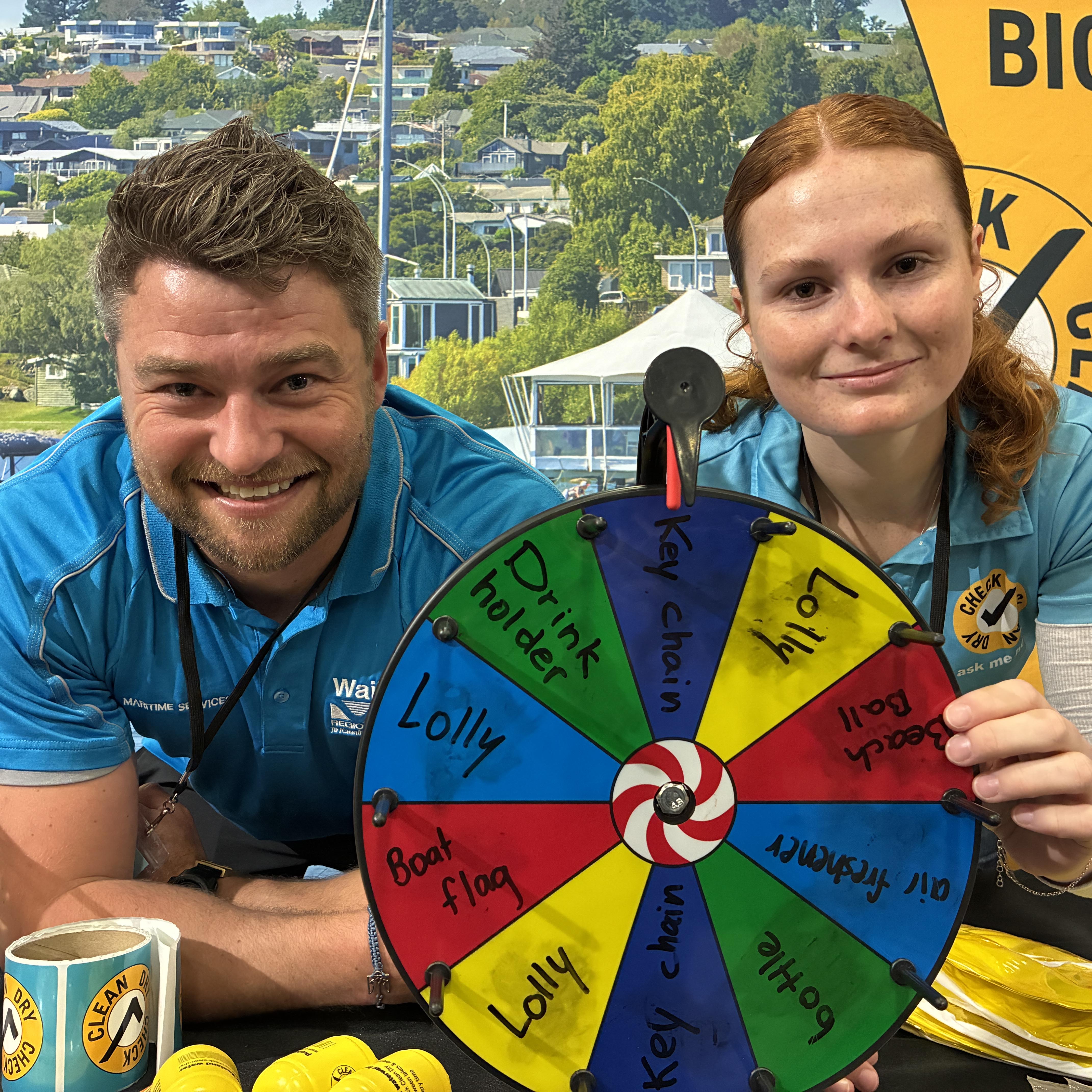
Waikato Regional Council staff with an engagement tool at the freshwater biosecurity stand
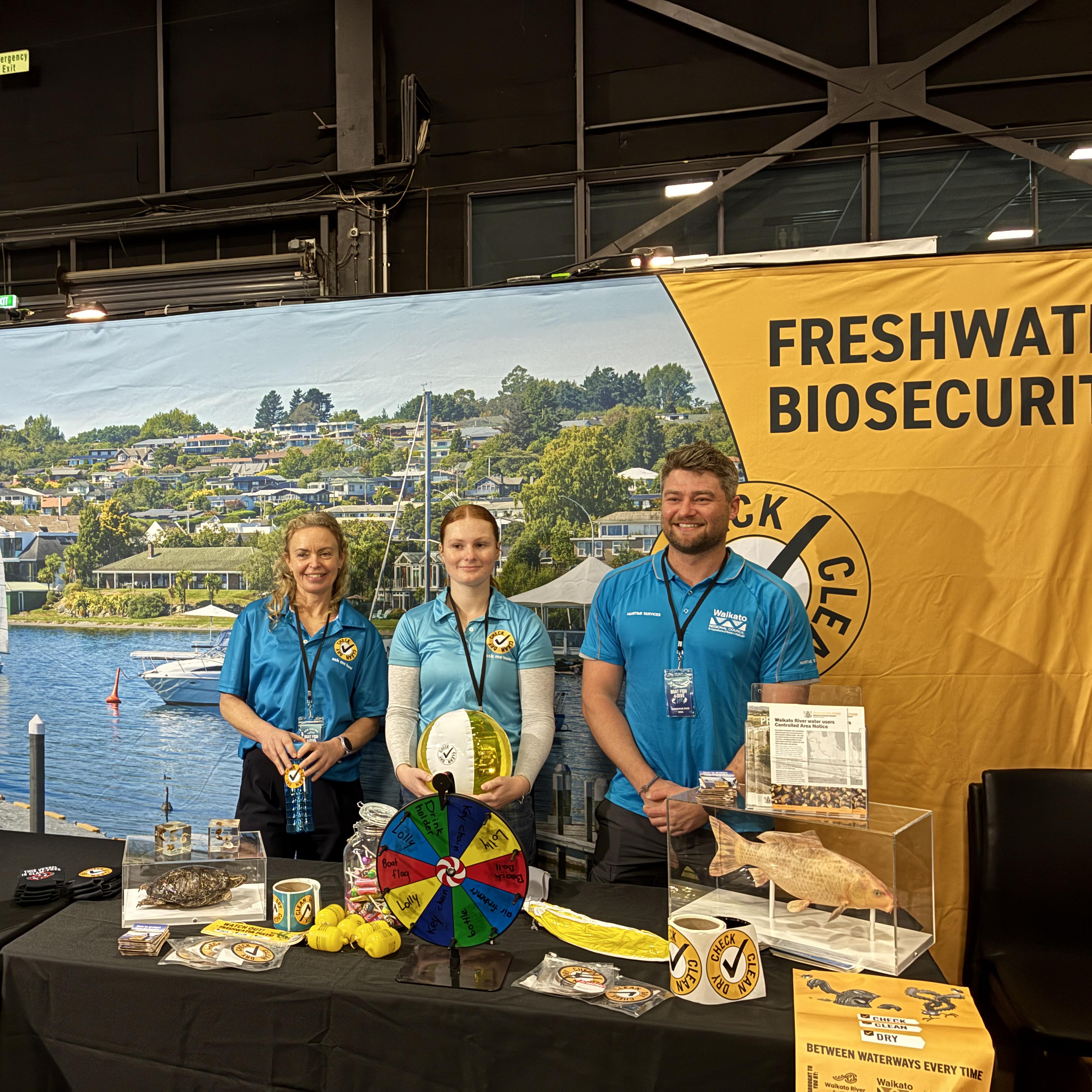
Staff from Biosecurity NZ and Waikato Regional Council at the freshwater biosecurity stand
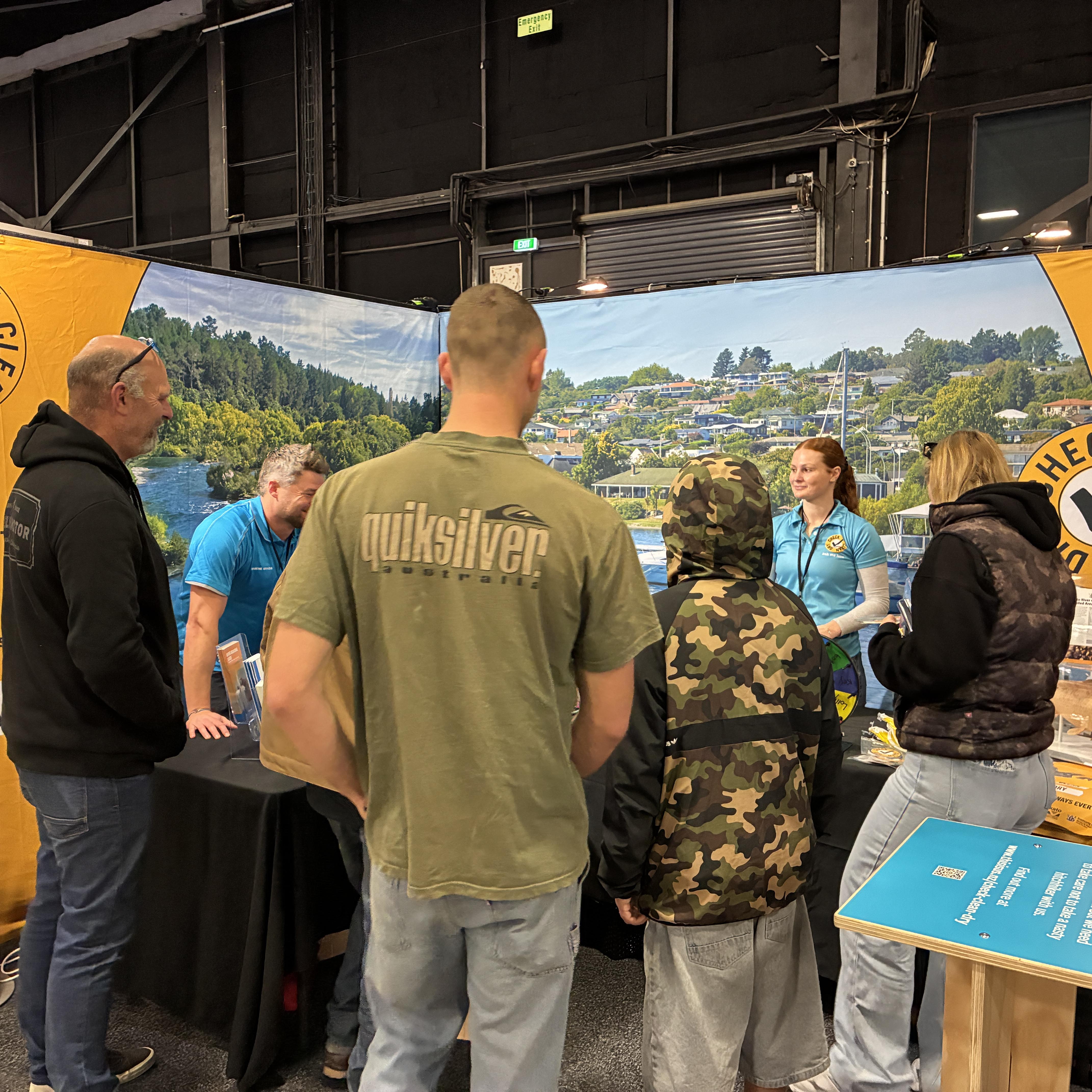
A busy freshwater biosecurity stand
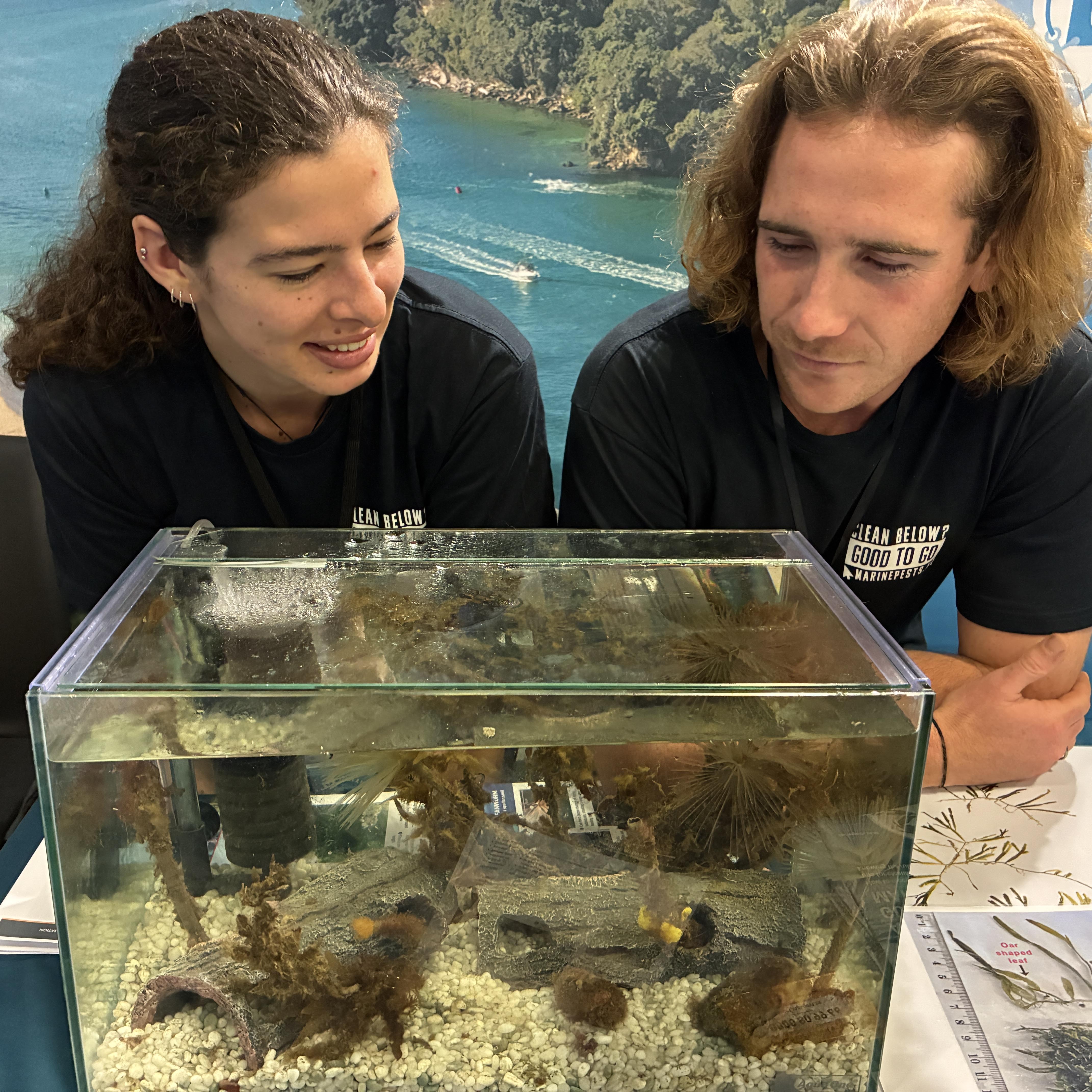
Waikato Regional Council staff observe live fan worms in an aquarium
With thousands of people gathered near Hamilton recently for a boat, fish and dive show, many took the opportunity to learn more about aquatic pests.
The New Zealand Boat, Fish and Dive Expo at Mystery Creek brought together a huge array of the NZ Marine Industry showcasing the latest products, boats, fishing and diving equipment, seafood and water-sport based gear that Aotearoa has to offer.
Waikato Regional Council staff, along with colleagues from other top of the north councils and Biosecurity New Zealand, were on hand to talk about freshwater and marine biosecurity.
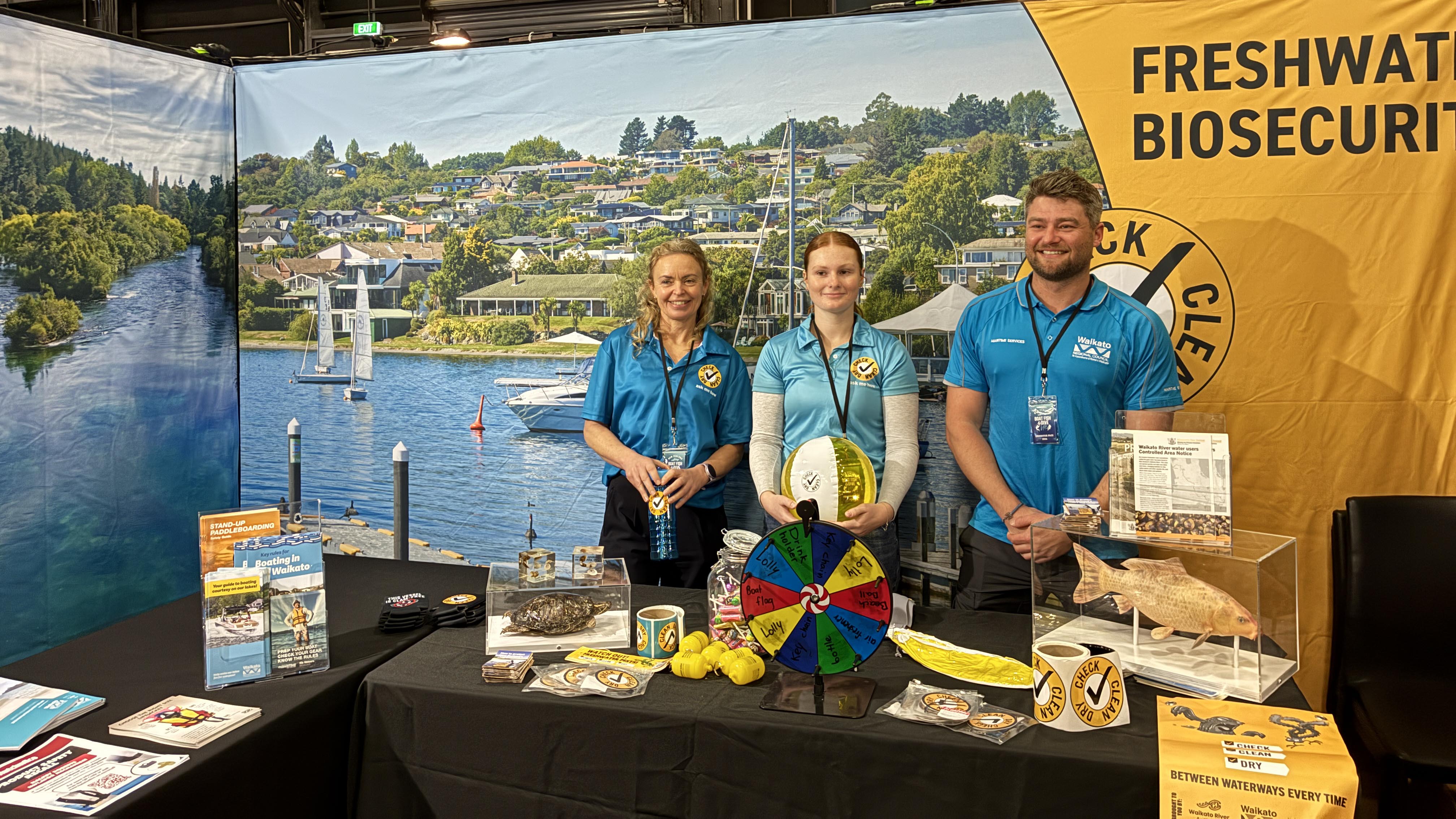
At the freshwater pest stand, people attracted by a ‘spin the wheel’ activity found they could examine a model of a koi carp; see a preserved red eared slider turtle specimen; and wonder at invasive freshwater clams encased in resin. All of them freshwater pests.
Meanwhile, at the adjoining marine pest stand, many visitors were captivated by the live Mediterranean Fanworm in an aquarium. These pest species are considered such a pest that they require a permit to be on display.
A strong focus at both sites was the danger to the environment that these often-unseen aquatic pests represent and the practical, everyday things that people can do to make a difference.
Staff were on hand to engage with visitors about biosecurity issues, including the importance of implementing ‘Check, Clean, Dry’, before moving boats and other equipment between waterways.
“Public awareness is improving and a lot of people are aware of ‘Check, Clean, Dry’” says Annabel Logan, a graduate student based at the freshwater pests stand who works part-time with Waikato Regional Council.
Meanwhile at the marine pest stand, fellow student and part-timer Georgia Litherland, says it was awesome to be able to engage with people and respond to their biosecurity questions.
Both students spent the previous summer with Waikato Regional Council engaging with the public about aquatic pests: Annabel at boat ramps along the Waikato River and Georgia at boats ramps and markets in the Coromandel.
Waikato Regional Council Biosecurity Marine and Freshwater Lead Danielle Kruger says the top of the north accounts for around 70 percent of the country’s marine vessel fleet with the large number of related vessel movements contributing to the risk of aquatic pests spreading.
“We work closely on aquatic pest issues with nearby regions – Northland Regional Council, Bay of Plenty Regional Council, and Auckland Council – along with national organisations such as Biosecurity New Zealand,” says Danielle.
“Once something gets established in the aquatic environment it's almost impossible to eradicate it, so prevention and education is the way to go to protect the environment,” says Danielle.
“Some pests are not found in certain locations and we want to do all that we can to limit their spread. This includes working with boat owners who we find really want to do their bit to help.”
Danielle says that there is much better awareness today about the situation of aquatic pests, although there is still a long way to go in educating people about the general issues.
Waikato Regional Council has a key role in educating people about freshwater and marine biosecurity and in this way to help prevent the spread of aquatic pests. Another aspect of the council’s work is carrying out biosecurity dive surveillance.
“We do several weeks of marine dive surveillance each year in partnership with the Bay of Plenty Regional Council,” says Waikato Regional Council Biosecurity Officer – Marine, Dave Pickering.
“We work together to look for invasive species, including those that may be new to the Waikato and Bay of Plenty.
“Scientific diving within New Zealand is quite niche, so there's not many people out there looking for these invasive pests. That's why it's really important to be able to educate the public because they're often the ones out there who see these things, whether that's kids in rock pools and people doing beach walks or fishing, or free divers and scuba divers, and others.
If people are out there and they see something that they don't recognise or looks strange, we encourage them to call the Ministry for Primary Industries on 0800 809 966 or complete their online report form.”