
Geothermal attractions are an important part of the Waikato region’s economy. They have spiritual and cultural importance to local Māori, as well as being an important tourist attraction.
Monitoring the number of visitors indicates what types of geothermal attractions are important to people and the economy. Visitors can threaten the natural character of our geothermal areas. A balance must be maintained so people can visit or use these areas without degrading or destroying them.
Damage to geothermal areas can occur through:
- people not keeping to designated pathways
- walking routes eroding due to foot traffic (although wooden boardwalks help prevent this)
- gravel from the paths contaminating sinter pools and terraces
- modifying pools for human use, changing their natural appearance
- vandalism
- littering
- farming activities (for instance, through stock damage, runoff and siltation).
Results - data and trends
This indicator monitors:
- estimated domestic and international visitor numbers to geothermal attractions in the Waikato region in 2011.
- visitor activities at geothermal attractions in the Waikato region in 2011.
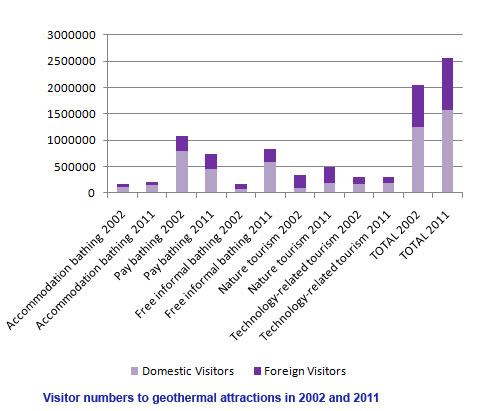
In 2011, approximately 2.6 million people visited geothermal attractions in the Waikato region - 60 percent from New Zealand (1.6 million) and 40 per cent from overseas (1.0 million).
Public bathing at geothermal attractions was the most popular activity with both groups. The second most popular activity for international visitors was ‘nature tourism’, and for New Zealanders, two of the region’s technology-related sites (Wairakei Borefield and the Prawn Park near Taupō).
The graph below shows how many people were estimated to have visited the Waikato region’s geothermal attractions in 2011. It also shows the activities visitors preferred:
Visitor numbers to geothermal attractions in 2002 and 2011
The Excel spreadsheet below contains the source data to this indicator's graphs and any additional data. The data were collected in the year ended June 2011.

Methods - how we monitor visitor numbers to geothermal areas
More information
Documents available from Waikato Regional Council
Barns and Luketina 2012, Valuing uses of the Waikato Regional Geothermal Resource, 2011/ 15, Waikato Regional Council, Hamilton.
Luketina K 2002. Numbers of visitors to geothermal attractions in the Waikato region. Environment Waikato Technical Series 2002/05. Hamilton, Waikato Regional Council.
Luketina, K., Olubode, F. & Phillips, Y. 2017. Valuing Uses Of The Waikato And Bay Of Plenty Geothermal Resource. 38th New Zealand Geothermal Workshop. Rotorua, New Zealand: The University of Auckland.