
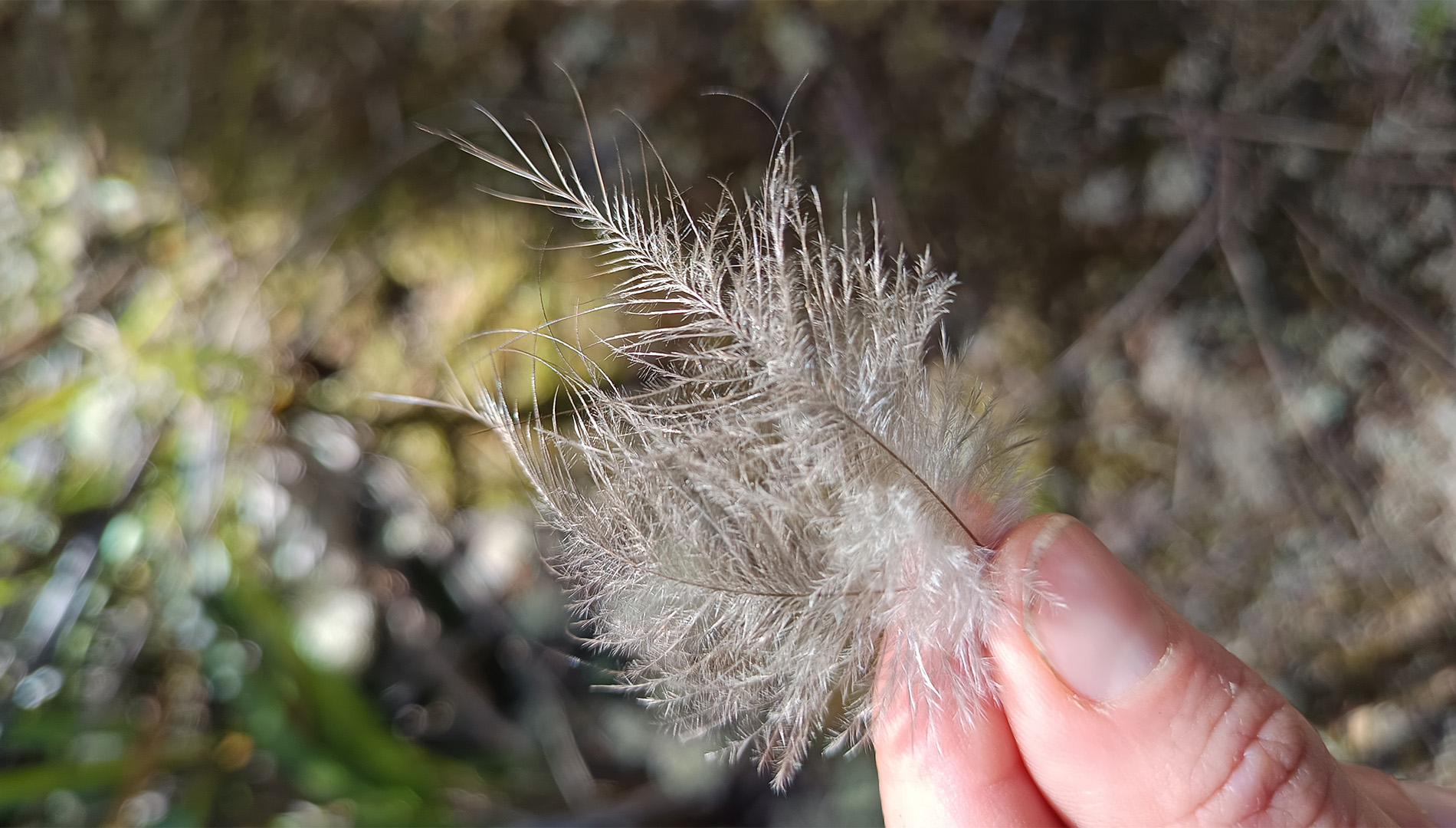
“Without the long-term support of WRC, we wouldn’t be able to commit to the landscape scale protection of natural habitats that this funding allows,” - Lettecia Williams, the group chairperson.
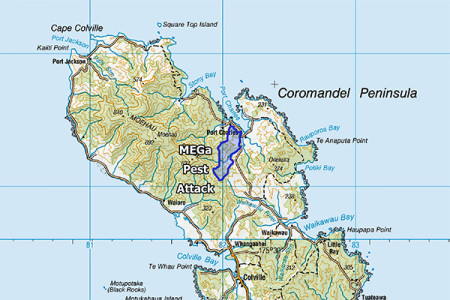
MEGa Pest Attack location Northern Coromandel
The Moehau Environment Group (MEG) has been on the frontline of the fight to conserve native plants and animals in northern Coromandel for the past 20 years. Their mahi includes the creation of a 450-ha open-sided sanctuary, MEGa Pest Attack, near Tangiaro/Port Charles.
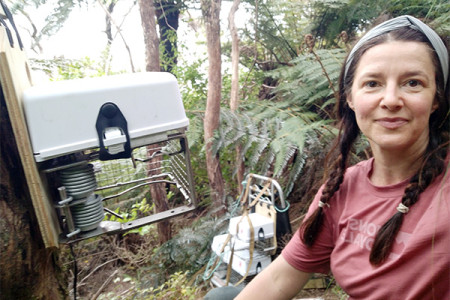
Peri from MEG installing an AT220 trap
With support from Waikato Regional Council, the sanctuary has grown from an initial 250ha intensive rat trapping zone in 2004 to its current size of 450ha, within a wider network of stoat trapping. Starting off as MEGa Rat Attack, it was renamed MEGa Pest Attack when efforts were stepped up to tackle the wild cats, possums, and ferrets that were threatening native birds in the area.
Nicky Ismay, Waikato Regional Council Biodiversity Partnerships Lead, said that the passion and dedication shown by groups like Moehau is inspiring. “Waikato Regional Council really values the incredible work being put in by so many community members. These partnerships, working together towards a common goal of increased biodiversity enable us to achieve far more collectively than we could do alone”, Nicky says.
Lettecia Williams, MEG’s chairperson, echoed the value of the partnership. “Without the long-term support of Waikato Regional Council, we wouldn’t be able to commit to the landscape scale protection of natural habitats that this funding allows,” she says.
MEGa Pest Attack is totally unfenced and open to the bush, which means that the kiwi can wander in and out and all the other birds can freely travel through the area. It also means the pests can roam freely, so a network of over 2600 rat traps are laid out in a grid, mostly 50 x 25m apart, and a surrounding network of 150 mustelid traps keep their numbers low.
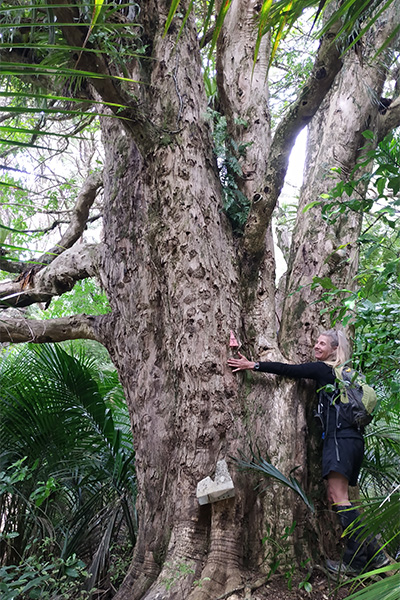
Caring and protecting nature, Ange from MEG
Possums, which are believed to have invaded the Coromandel in the 1980s, are also a threat to forest and wildlife, so a perimeter network of self-resetting AT220 traps (created by NZ Auto Traps) was installed, with more traps placed on spurs and ridges within the sanctuary. These have drastically reduced possum numbers and help to hold back rat reinvasion. The group is also using live cage traps and SA2 cat traps in feral cat territories.
“We love to encounter any native birds on our traplines, but it is a special thrill to see and hear rare miromiro / tomtits active at breeding time. It makes the trapping worthwhile!” says Peri Mawson, field team.
The concentrated trapping regime requires an enormous amount of tough physical labour, not only to lay the traps in the first place, but also to clear them regularly. It takes the equivalent of thirty person-days to clear all the traps each month, which is a major undertaking.
Providing boots on the ground are also around 80 – 90 volunteers per year (some signing on for specific projects, such as wild ginger weeding days or taking on monthly checking of a stoat line in the 16,000 ha mustelid trapping network). There are also contracted trappers and seven paid part-time staff, including the operations manager, and a communications and community engagement manager, with a volunteer committee at the helm.
“Volunteers provide more than just their labour, they also give us their joy and enthusiasm for helping our natural world. We love seeing the excitement of volunteers talking about their traplines, kiwi night listening, bird monitoring, or tackling invasive weeds. Their spirit keeps us all going.” says Steph Parkyn, community engagement manager.
The Moehau Environment Group is also carrying out other projects in northern Coromandel, including a decades-long project at Waikawau Bay wetland, working to protect threatened birds and invertebrates, and a large-scale kiwi project helping to make a safe habitat for kiwi from Coromandel Town to Port Charles.