
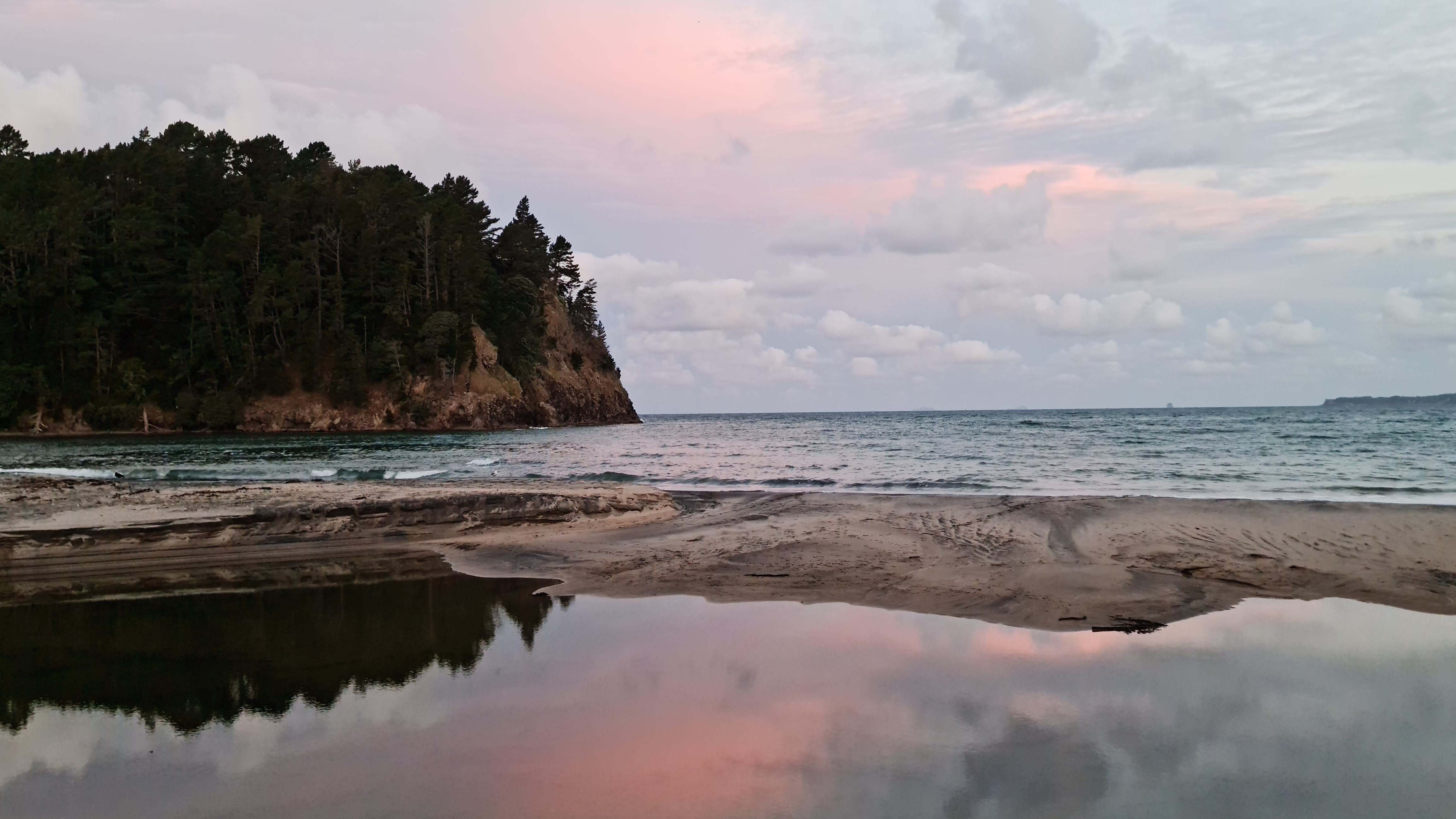
What’s really cool about the trust and my job is the ability to support others to advance our conservation objectives
- Kaiwhakahaere Kaupapa - Project Manager, Paula Judd
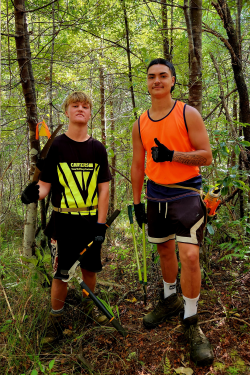
Solomon Williams and Manihera Indigo Tule, two rangatahi employed through Ngāti Hei to undertake environmental work for Project Kiwi in a kaitiaki capacity
The protection of Coromandel brown kiwi has received a boost with two years of council funding going to conservation group Project Kiwi Trust.
The trust will receive almost $40,000 from Waikato Regional Council’s Environmental Initiatives Fund for the purchase of predator control materials and track maintenance.
This represents part of almost $480,000 in grants made to 15 projects announced in the 2025 funding round.
Established in 1996, Project Kiwi Trust works to protect Coromandel brown kiwi on the Kūaotunu Peninsula near Whitianga.
For the kiwi population in the area to be stable and experience growth, pest and predator control needs to be maintained.
The trust services and checks over 500 traps targeting mustelids throughout the year. They also support a bait station programme that targets rats and possums over some 70ha.
“The trust has strong local support, with a mix of volunteers and contractors contributing to varied conservation activities such as check trap lines and bait stations, and regular kiwi surveys,” says Kaiwhakahaere Kaupapa - Project Manager, Paula Judd.
“People living locally are often life-stylers, who work part-time or are retired and have some time available that they want to devote to conservation.”
Given the varied terrain, access to the network of traps and bait stations can be by quad bikes, four-wheel drive vehicles and walking. The efforts in support of kiwi conservation appear to be bearing fruit.
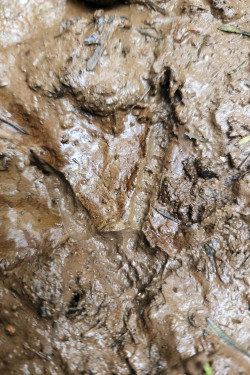
A kiwi footprint in Kūaotunu clay (Caption: Sara Smerdon)
Since 2003, the trust has run a regular kiwi survey. Currently done every two years, the survey sees volunteers deployed to nine base sites over three nights. During a two-hour period each night, they record details about all the bird calls they hear and their location, along with other information such as atmospheric conditions.
Kiwi are also fitted with transmitters, so even though they may not call during the survey, it’s possible to detect them.
An additional 17 sites allow for mapping of population change out of the core areas where kiwi have spread.
The survey of base sites points to a growing kiwi population estimated at some 300 pairs, plus 150 juveniles and 150 chicks.
Data from the additional sites helps to identify where more traps are needed, especially when kiwi are producing chicks which are vulnerable to predators, especially stoats.
The trust shares information collected with surrounding landowners and other conservation groups to make the best use of the data and support the best outcomes for kiwi.
Paula has been involved with the trust for the past 17 years and finds the work rewarding.
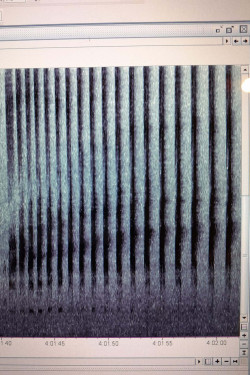
The call of a female kiwi captured on a software programme interpreting acoustic recorder data (Credit: Lisa Kearney)
“What’s really cool about the trust and my job is the ability to support others to advance our conservation objectives.
“At the same time, I love the variety, autonomy, limitlessness and progression. The work goes in every direction, and my brain is really stimulated all the time.”
Paula supplements her part-time role with a regional coordinator position at Save the Kiwi.
Waikato Regional Council’s Environmental Initiatives Fund is part of the Natural Heritage Partnership Programme. Find out more on the Environmental Initiatives Fund webpage.