
"It's very satisfying and rewarding to be able to make a difference"
– Rusty, volunteer
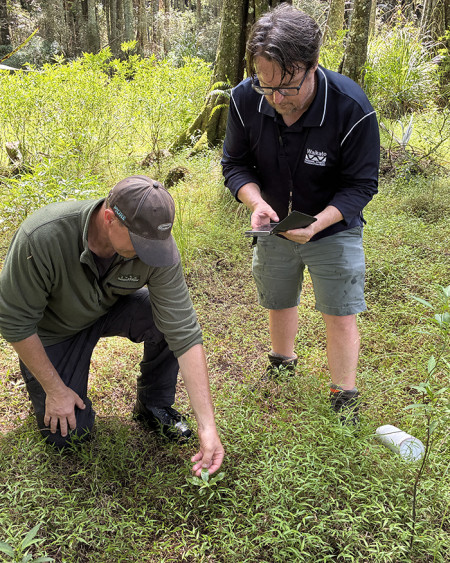
Rusty and Jacob examine a suspected pest plant, confirming its identify with the help of an online tool
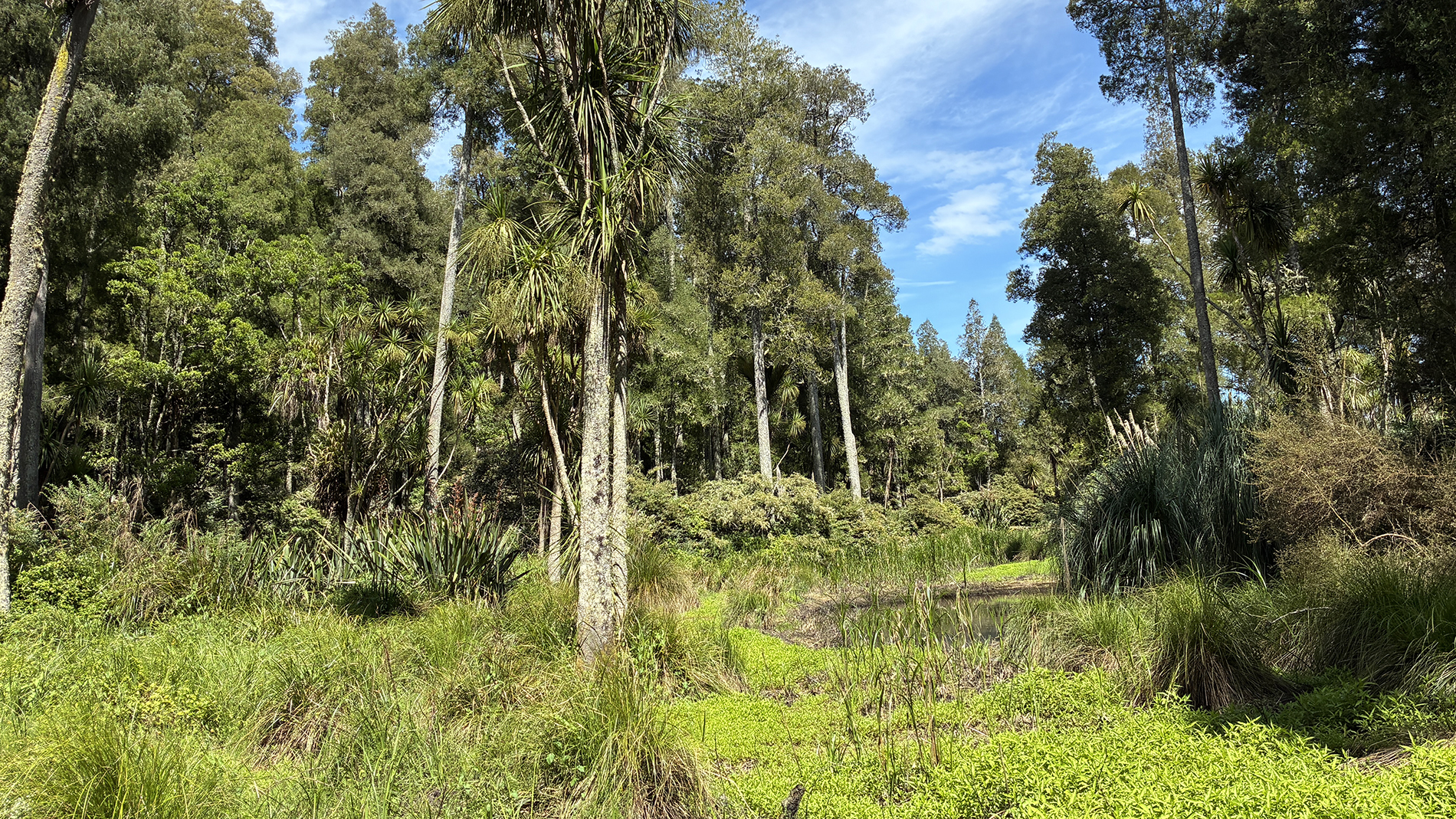
A significant kahikatea-wetland forest remnant in the northern Waikato is experiencing a turnaround in native birdlife with help from dedicated volunteers and Waikato Regional Council.
Piggott Wetland comprises 68ha of kahikatea-wetland forest on the banks of the lower Waikato River with some 30ha being controlled for pest animal and pest plants.
The remnant is significant in size, with over half of kahikatea remnants in the region under 1ha. It’s considered a priority biodiversity site.
Part of the wetland forest is owned by Auckland-Waikato Fish and Game and leased and managed by the Piggott Wetland Society, a group of duck hunters.
For its part, Waikato Regional Council has provided funding of just over $8,000 towards traps, bait stations, bait and lure.
With the assistance of Predator Free Franklin, volunteers installed the pest control devices, keep them maintained and records results online.
Russell Dance, known as Rusty, has been volunteering at the wetland for the past three-and-a-half years, checking traps and weeding out pest plants.
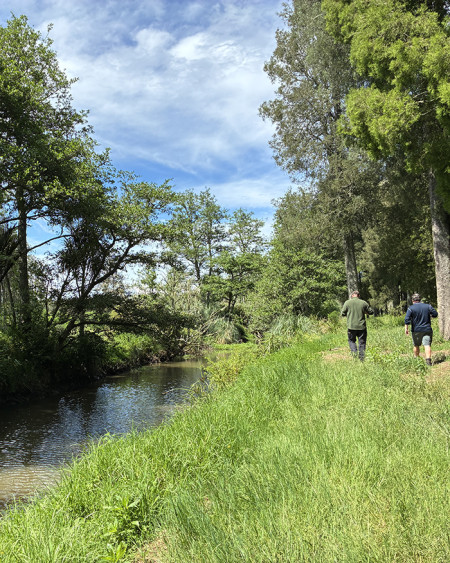
Rusty and Jacob discuss the trapping and weeding work being carried out in Piggott Wetland
A commercial and industrial refrigeration technician by trade, Rusty makes time to be on site once or twice each week.
"It makes me feel happy after volunteering here," says Rusty.
"It's very satisfying and rewarding to be able to make a difference."
Rusty says that possums and rats are the main pest animals caught by the six council-supported automatic traps and network of bait stations spread throughout the wetland, along with other traps used by the society.
During his time at the wetland, he has removed more than 300 possums and rats from the local ecosystem.
"In the early days, there used to be possum poo everywhere and the traps got fairly full," says Rusty.
“There was not much in the way of bird life - it was just the sound of silence.”
Rusty says with the ongoing trapping, the number and variety of birds has increased.
“Now there are way more birds and noticeably more stick insects, wetas and lizards.”
The wetland is home to varied birdlife including kererū (woodpigeon), tūī, kingfishers, pūkeko and bellbirds. A flock of large māpunga (black shag) nest in a section of high trees.
Rusty also keeps a sharp lookout for pest plants such as privets and nightshade.
"The weeds are a lot to keep up with - they are very invasive," says Rusty.
"You have to really keep on top of it, or they will shade out the native plants."
"You can see the difference as a result of getting rid of pest plants," says Rusty. "The other plants do better."
Rusty got involved originally because the local duck hunters wanted someone to trap pest animals. They contacted Rusty, who had been doing trapping at Mount William and Alexandra Redoubt.
"I came to the wetland to have a look and thought that this place is so cool," says Rusty. "Then I got stuck in.
Rusty says he got lost at first in the wetland, but putting up marker triangles at the trap stations helped with orientation.
“This project a good demonstration of council working with a community group and motivated volunteer to achieve good outcomes for Waikato’s priority biodiversity,” says Waikato Regional Council Biodiversity Sites Lead Jacob Dexter.