
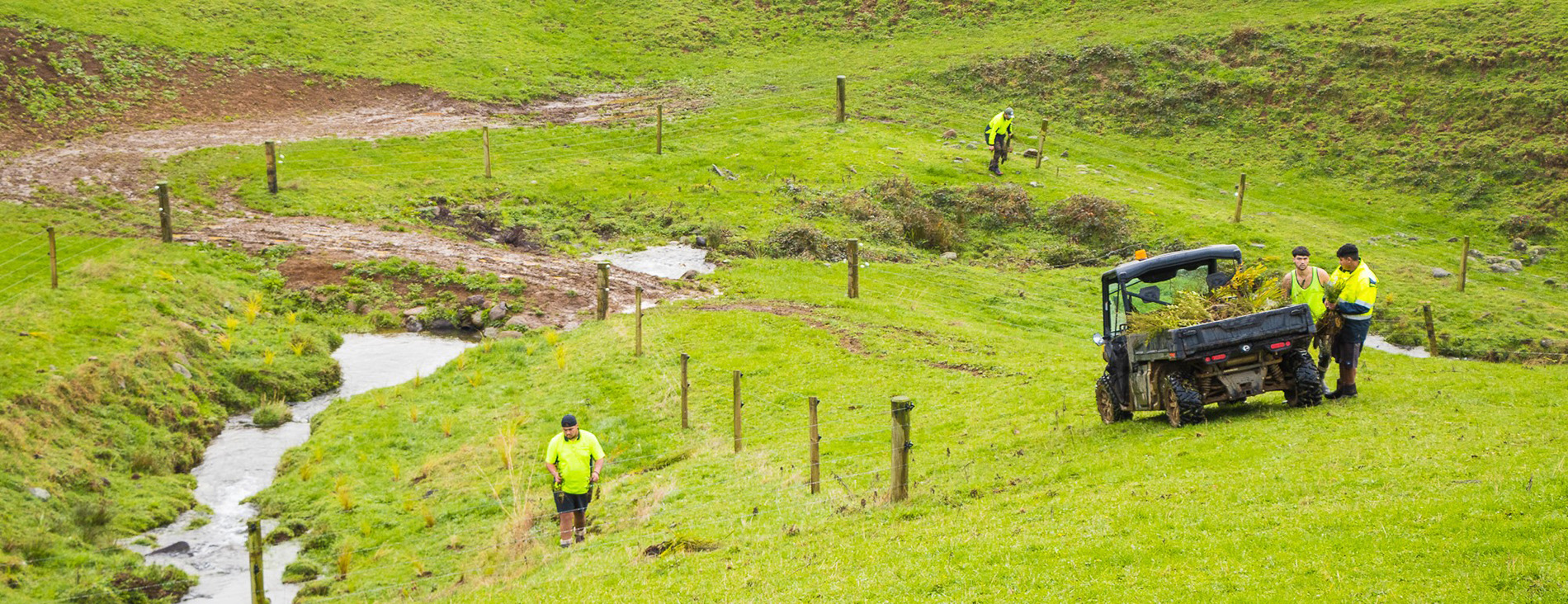
"Having fingers of mature bush from way down here to the top of the mountain is going to look really choice."
- Mike Cornes, farmer
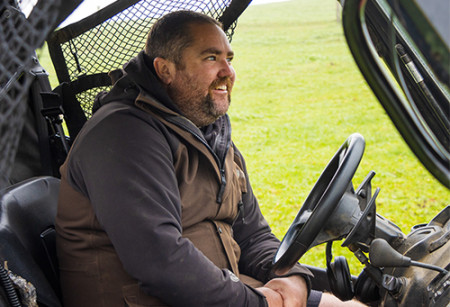
Mike Cornes has 14 kilometres of fenceline protecting three main creeks from stock on his family farm on the eastern slopes of Mt Karioi.
Seventy years ago, Mike Cornes' grandad cleared the family farm on the eastern slopes of Mt Karioi, near Raglan.
Today, Mike is watching the 30,000 trees he’s had planted regenerate the land.
"When Grandad arrived, he had 400 acres and 90 of that was already cleared," says Mike, who took over running the farm when his grandad retired.
"He cleared the rest with an old bulldozer, a few chainsaws and a match. He was cutting down the totara and turning them into posts for fencing."
"And now I’ve planted it back."
About three years ago, Mike started fencing off both sides of three main creeks on the property – a total of about 14 kilometres of fenceline – with the hope of planting them out to create corridors for native habitat and help protect water quality.
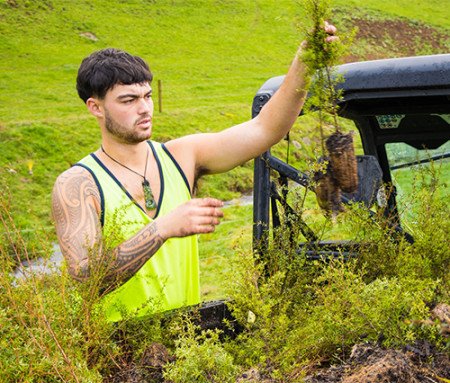
Pūniu River Care provided and planted 30,000 native plants in the Cornes' farm.
Mike says the riparian margins of 5 metres to 50 metres he created were a bit of a shock to Grandad, because "back in the day they would farm every skerrick of land".
"Now you are better off utilising good country only; there’s no point in fertilising right up to the stream."
"And due to the steep sided nature of some of the banks and wide margins from the creeks, we didn’t want it to become filled with weeds, so we thought it’d be great to plant them out."
This is where the council's Clean Streams 2020 project helped out.
The three-year Clean Streams 2020 project, which was awarded $1.998m by Te Uru Rākau – New Zealand Forest Service’s One Billion Trees Fund, was set up in 2020 to enable landowners who permanently retired a stream, wetland or seep from grazing, have that area planted in native plants at no cost to them.
The funding was part of the Government's economic recovery response to COVID-19, to stimulate the construction and environmental industries and economy, be of public or regional benefit, and create jobs.
Last year, as part of the project, about 30,000 native plants went into the riparian areas set aside by the Cornes family.
Altogether, the project has seen the planting of nearly 370,000 mixed native plants on 132 hectares of retired land across the Waikato
Catchment Management Lead Callum Bourke says the Cornes' farm ticked all the boxes for meeting soil conservation, biodiversity or water quality requirements.
"The streams have very high biodiversity values. Their source is the mountain and they have clear, stony bottoms that provide habitat for koura and several at-risk native fish species."
"Having fingers of mature bush from way down here to the top of the mountain is going to look really choice," says Mike.
"We would never have been able to do this without the funding."