
We posted on our Facebook page about the programme and parents have been commenting that their children have thoroughly enjoyed the experience
Matamata Intermediate Deputy Principal Emma Lockett.
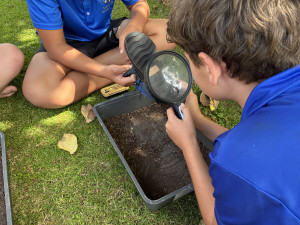
Students work together to clean footwear of dirt and then check to ensure it’s clean
Matamata students are among the latest cohort of young people to benefit from an interactive programme that’s teaching how to protect our native kauri trees.
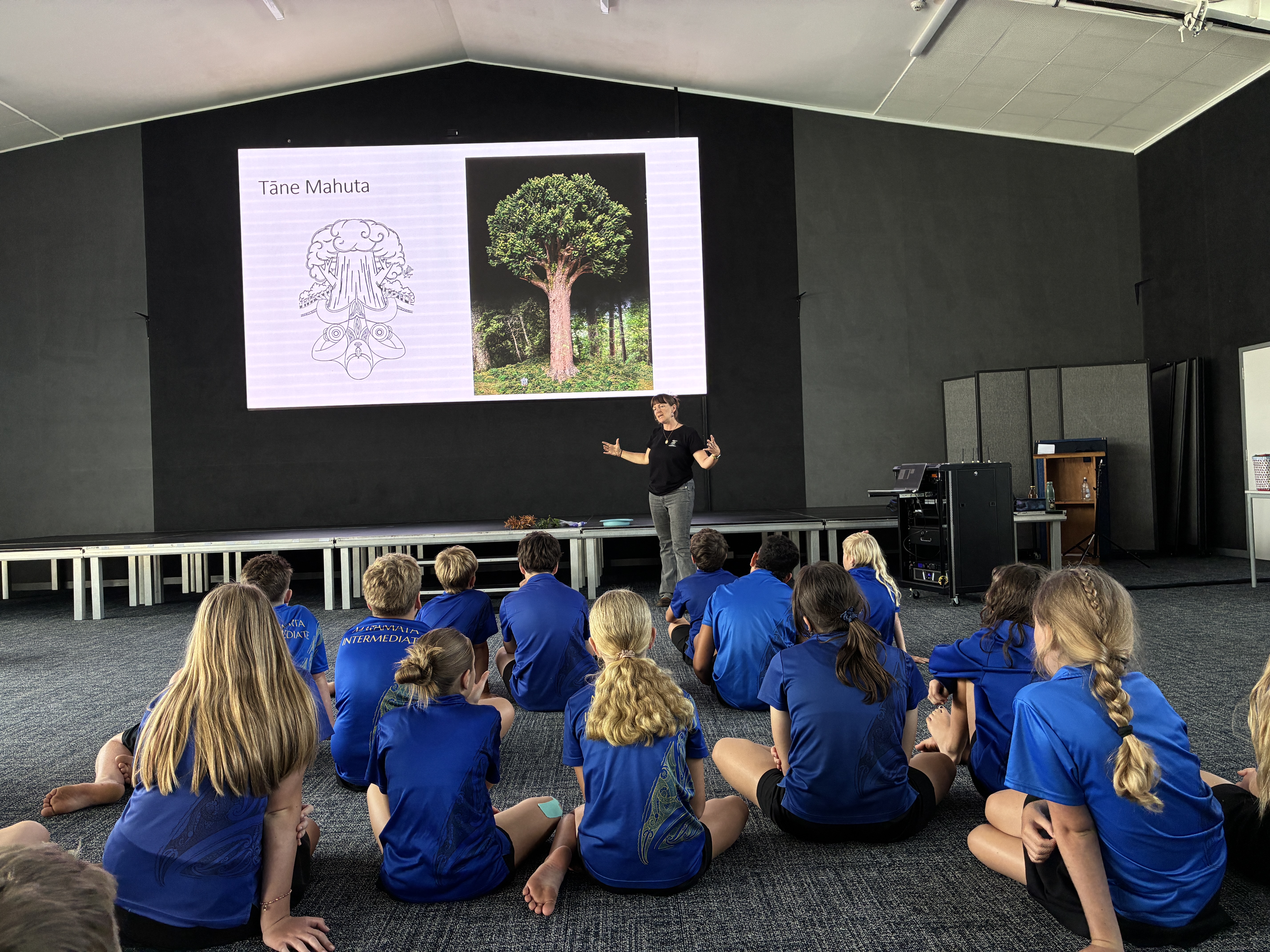
Waikato Regional Council’s kauri education team spent a week at Matamata Intermediate School recently, reaching all 14 classes and some 400 students with a kauri protection experience.
Each class received a 90-minute session including a briefing and practical activities.
“We like to start off with students telling us what they know about kauri,” says Enviroschools Facilitator, Rachael Cheeseman.
“In this school they've known plenty, so it's been a really engaging start to the session.”
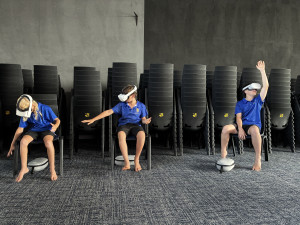
Children immersed in the kauri virtual reality experience
In the briefing, students learn the importance of kauri, key facts about the tree, and how they can do their bit to protect this taonga of the forest.
The Waikato region has over 94,000 hectares of kauri forests, of which more than 20,000 hectares is old growth kauri forest. The Matamata area is home to a number of planted kauri, such as in the town centre and along town streets.
Southern kauri are vital to the future of kauri in New Zealand, being predominantly free from kauri dieback disease.
“These students have been so curious, their in-depth questions have been surprising for us,” says Rachael.
“They are really wanting to know more detail about the how the trees might get infected with kauri disease, and the why, so we've been able to give them detailed information including what the Waikato Regional Council team does in testing soils and checking on kauri.”
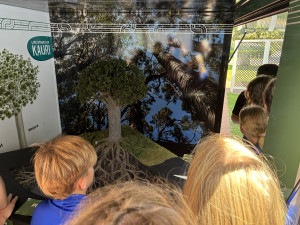
Children check out a kauri tree scale model complete with the usually hidden root system
Classes rotate through three sets of activities built on what they learned in the briefing including a kauri virtual reality experience and understanding the importance of cleaning footwear and gear to stop the movement of dirt from around kauri and so to protect from kauri dieback disease.
Children also examined a large Wētā Workshop kauri tree model and its extensive root system, before taking part in a group activity, holding long ropes to illustrate the actual size of a kauri tree’s canopy and the spread of its roots.
Deputy Principal, Emma Lockett says the response of students was extremely good with students being highly engaged.
“We posted on our Facebook page about the programme and parents have been commenting that their children have thoroughly enjoyed the experience,” says Emma.
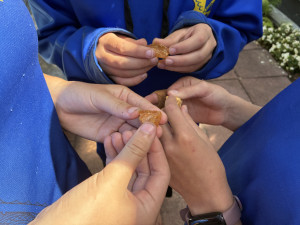
Students examine kauri gum as part of the kauri experience
For the school, the timing of the education sessions was ideal, coming as it did before a school camp in Waihi Beach.
“The kauri education has been part of student’s pre-camp learning. We wanted to learn about kauri dieback disease and how we can support our environment.”
The kauri education programme is important because it helps students form a meaningful connection with kauri says Alana Howat, Waikato Regional Council’s biosecurity coordinator – kauri protection.
“Through hands on experiences seeing, touching, and learning about these ancient giants, students discover what makes kauri so special and why they need our protection,” says Alana.
During 2025, the kauri education team visited 19 schools around the Waikato.