
“Our region’s transition to a low-emissions economy represents a huge opportunity not only to reduce trade risk but also to increase our energy resilience and positively influence the future economic development of our region.”
Waikato Regional Council Chair Warren Maher
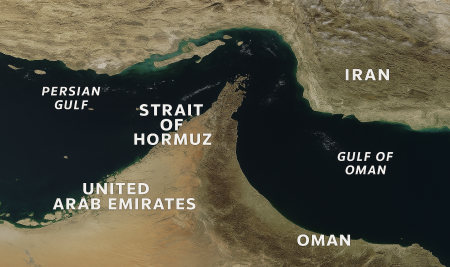
The Strait of Hormuz, a waterway around 20 per cent of the world’s oil passes through.
The current crisis in the Middle East has exposed the precariousness of a business-as-usual approach to energy security worldwide.
Around a fifth of global oil production flowed through the Strait of Hormuz – a narrow, strategically vital waterway between Iran and Oman – before it was closed by Iran in response to the US-led war.
Around 80 per cent of this oil would normally be bound for the Asia-Pacific, leaving our part of the world in particularly tough spot.
And because New Zealand now imports all refined petroleum products, including petrol, diesel and jet fuel to meet domestic needs, we rank among the most exposed to the resulting oil shock.
This is being felt by all of us at the petrol pump and is likely to have far-reaching long-term inflationary impacts – significantly increasing the chances of recession.
But, within every crisis, so the saying goes, there also lies opportunity.
The opportunity for the Waikato region is in the unprecedented potential of the present moment to focus the minds of a wide range of stakeholders on three critical threads – energy security, energy equity and environmental sustainability.
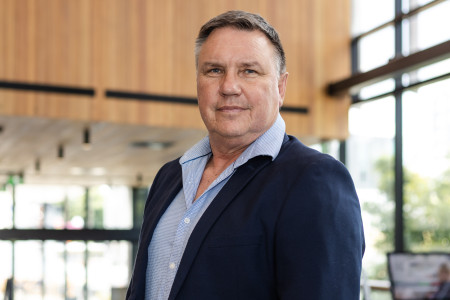
Waikato Regional Council Chair Warren Maher.
Enter the Waikato Regional Energy Strategy 2026-2050.
Waikato Regional Council Chair Warren Maher says, “This strategy – which has been in the pipeline since well before the current crisis hit the headlines – poses three central questions to help guide our approach to energy: Can we count on it? Can we all afford it? And is it sustainable?
“Different stakeholders across the region, and nationally, hold different pieces of the energy security puzzle – from central and local government to iwi and energy companies – including, everything from policy levers to private sector investment. This strategy provides the picture on the box that helps bring them all together.”
“Our region’s transition to a low-emissions economy represents a huge opportunity not only to reduce trade risk but also to increase our energy resilience and positively influence the future economic development of our region.”
“Two of the cheapest electricity sources globally last year were onshore wind, solar panels – this means we’ve already passed the crucial tipping point where some renewables have become cheaper than fossil fuels.
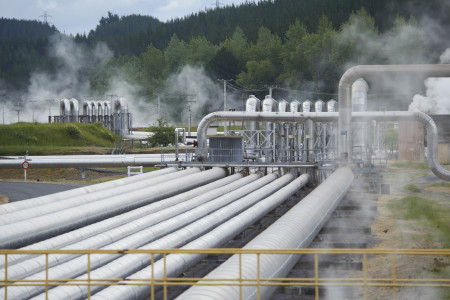
Strategic hubs like Wairakei have the potential to generate clustering efficiencies.
“That’s also true in the private sector and for households. Adopting more renewable and energy efficient technologies can help drive down operating costs to keep businesses competitive. And switching to alternatives like EVs and solar can help to insulate household finances from increasingly volatile energy prices.
“The old arguments that pitted environmental care against economic growth no longer stack up. This strategy recognises that we can – and should – progress both at pace.”
The Waikato region has long been an energy leader and was the first in the country to develop a regional energy strategy back in 2009.
The region is also the powerhouse of the national energy system, generating 36 per cent of New Zealand’s electricity, 68 per cent of which is exported to other parts of the country.
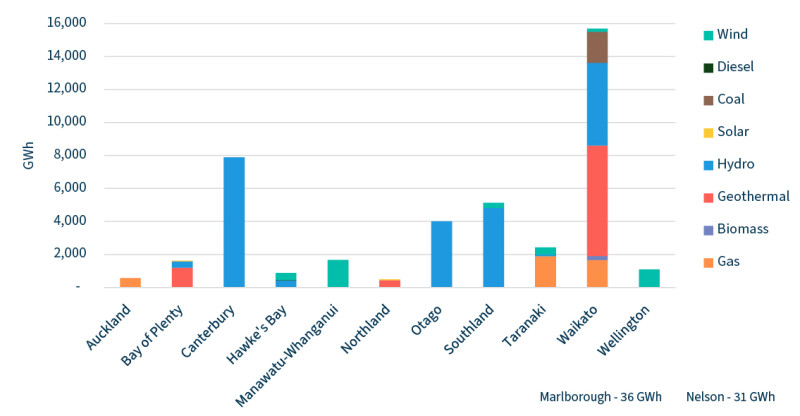
Electricity generation by region bar chart - Section 2.2: Regional picture Waikato Regional Energy Strategy 2026-2050.
It accounts for 75 per cent of New Zealand’s high-temperature geothermal resources, has strong solar and wind potential and the country’s largest thermal station at Huntly.
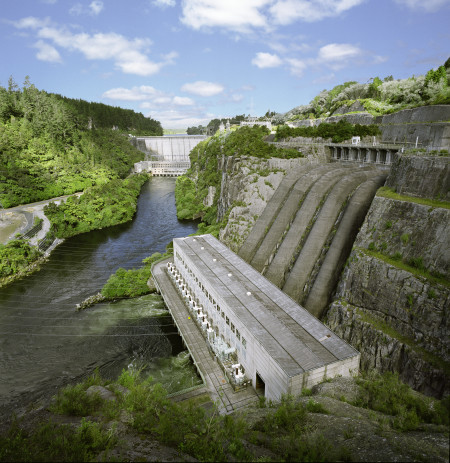
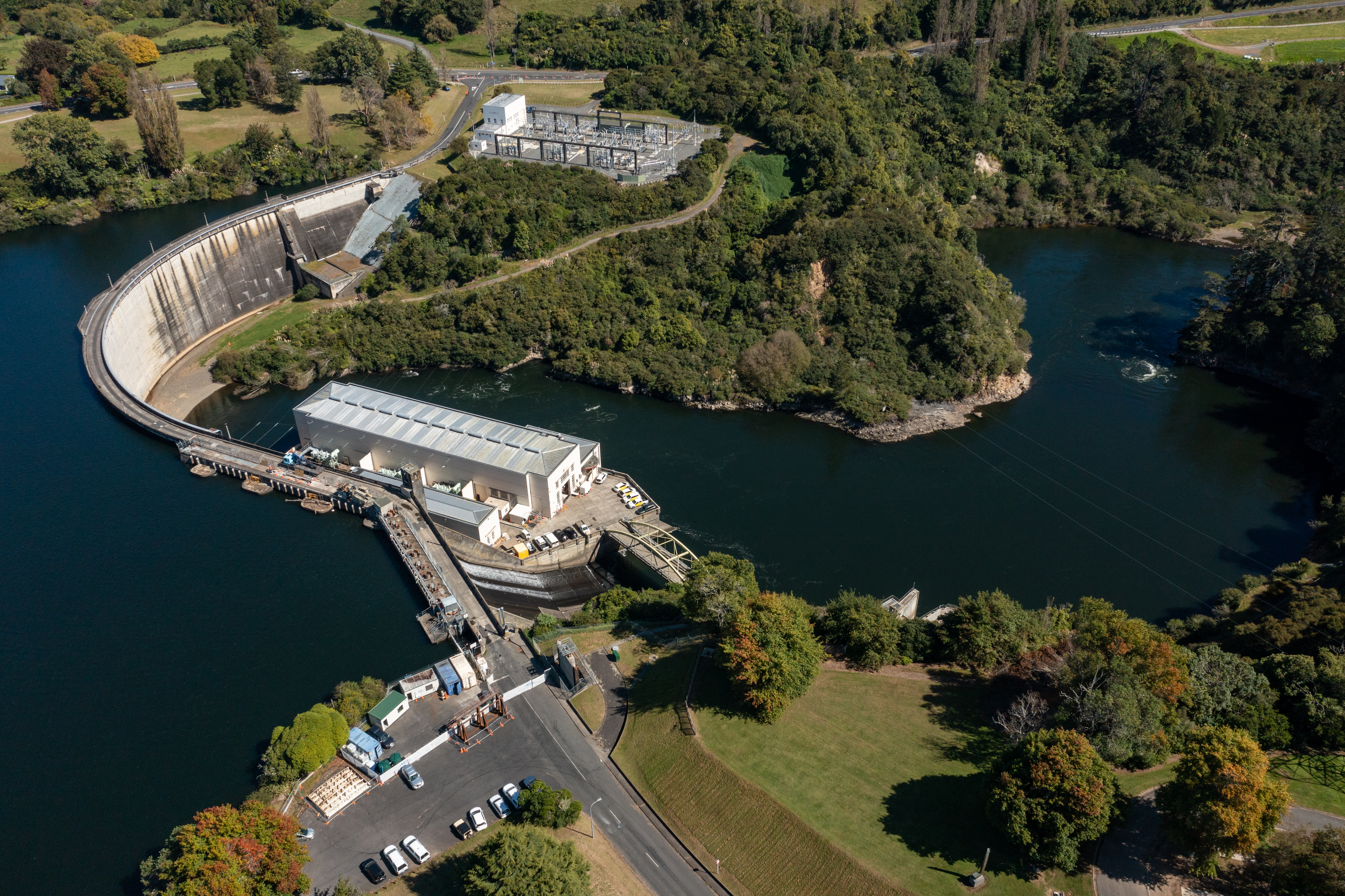
Hydroelectric dams like Maraetai supply 10 per cent of the Waikato’s electricity
And the region is home to nationally critical hydroelectric schemes – with the Waikato River alone generating 10 per cent of the country’s electricity.
These advantages uniquely position the region to anchor new low-emissions industries and accelerate the transition away from fossil fuels.
If we get it right, this could help create new high-quality jobs, tackle energy hardship, minimise exposure to volatile global markets, drive economic growth and reduce greenhouse gas emissions.
Principal Strategic Advisor, Blair Dickie says, “The strategy recognises that the current energy system is no longer fit for purpose.
“We all face high and volatile energy prices, declining domestic gas supply and increasing electricity demand, as well as both rising climate pressures and energy hardship.
“This strategy recognises that short-term adjustments and tinkering around the edges will take us only so far. We need to address the structural issues putting the handbrake on our transition towards a more equitable, sustainable and resilient energy mix.
“There’s no silver bullet. In fact, the policy levers available to Waikato Regional Council alone are quite limited.
“But there is a way forward. And, for us, that’s based on strong strategic partnerships, advocacy and leadership, clarity from national policy settings, workforce capability and capacity, information and monitoring, and consistent funding.”
A range of approaches are at our disposal: not one solution, but many. The regional energy strategy proposes the establishment of a regional energy forum – including iwi, industry, researchers and others – to help lead implementation, accelerate progress and unlock innovation.
It also notes that transitioning existing industries and locating new ones close to where renewable energy is found could help to capture more of the economic benefits and reduces transmission losses.
Renewable energy hubs, located at strategically connected and established sites, like Wairakei/Taupō, Tokoroa and Huntly, for example, have the potential to yield the more efficient, effective and rapid economic and employment growth.
Modelling potential investment scenarios
The strategy models three investment scenarios: business as usual, static, and dynamic, concluding that the most ambitious (dynamic) scenario – which also promises the biggest payoffs – is the one the region should be aiming for.
The graphs below show where we started in 2025 and where we could end up by 2050 if we followed the path modelled in the dynamic scenario.
Starting energy mix (2025)
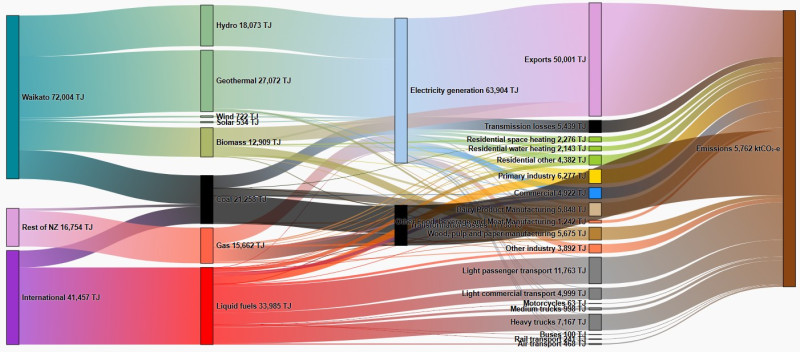
2025 Sankey diagram - Appendix B Waikato Regional Energy Strategy 2026-2050.
Potential future energy mix in the dynamic scenario (2050)
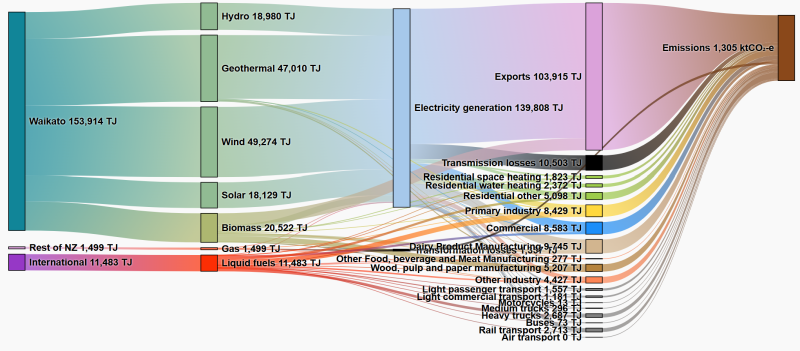
2050 Dynamic Sankey diagram - Appendix D Waikato Regional Energy Strategy 2026-2050.
Council Chair Warren Maher says the benefits are obvious: “The more ambitious ‘dynamic scenario’ would require a greater short-term investment to reach its 2050 vision – $22.5bn nationally, around $4.5bn of which would be funded within the Waikato region.
“That might sound like a lot but knowing that $10.8bn was spent nationally on imported fossil fuels in 2024 alone really puts the pragmatic nature of this sort of investment into perspective.
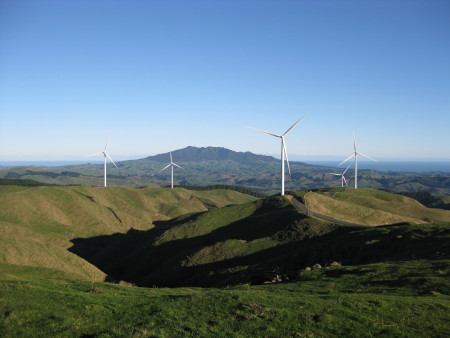
Onshore wind power like that generated by the turbines at Te Uku is now cheaper than fossil fuels.
“What was most compelling to me and other councillors though was the modelled financial and non-financial returns we could expect to see for that investment.
“Compared to business as usual, these included a 2.5 per cent increase in employment and wages, a 1.5 per cent increase in national GDP, a 54 per cent increase in electricity generation, and a 24 per cent greater decrease in greenhouse gas emissions (or a 77 per cent drop from current levels).
“And, crucially, we could expect a 35 per cent lower hit to national GDP in the event of a future oil shock.
“Although these numbers naturally sparked much curiosity and a healthy dose of scrutiny from councillors – along with the acknowledgement that a lot needs to go right across multiple local and national political cycles to get there – we’re absolutely behind this strong vision for a more productive, prosperous and resilient region.”