
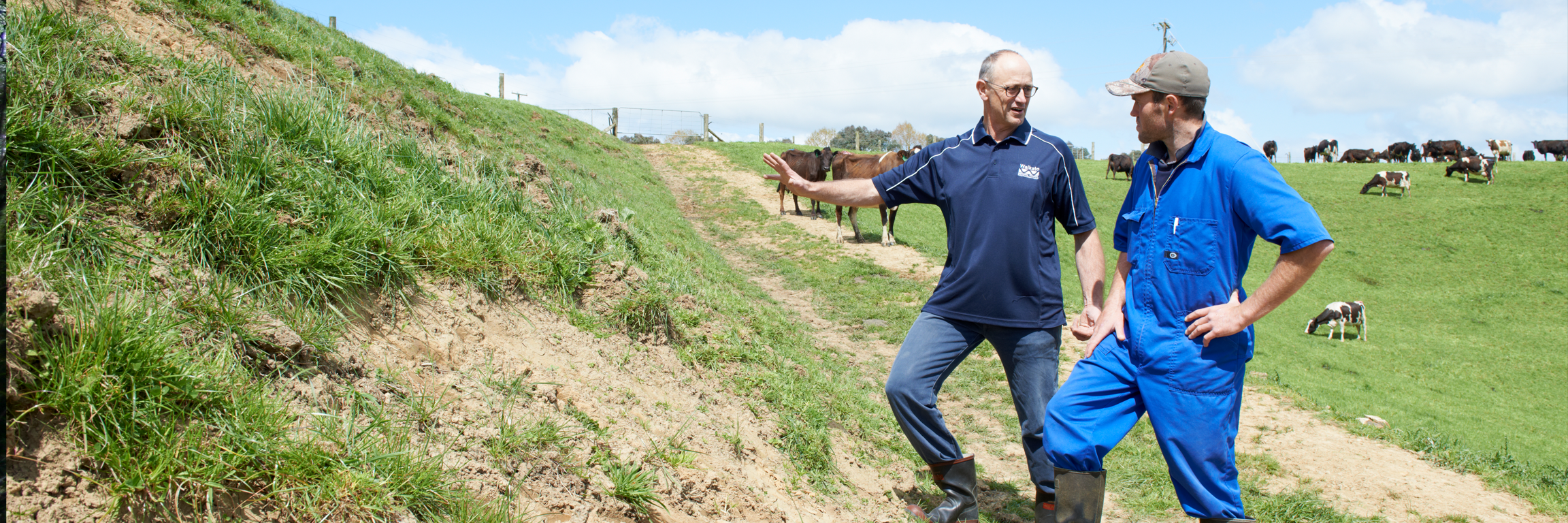
"With all the food we produce, it’s easy to be complacent, thinking that we have an endless abundance of versatile land and healthy soils for agriculture, but this isn’t actually the case."
- Waikato Regional Council Soil and Land Team Leader Dr Haydon Jones
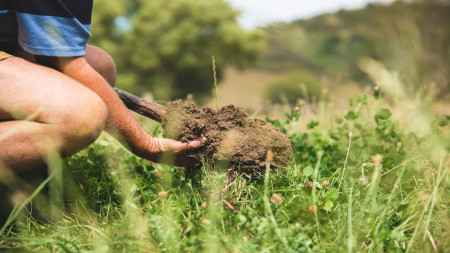
Good soil is necessary for sustainable food production and the jobs that depend on it
No one factor determines why some societies thrive and others decline.
But there’s a common theme that often appears when things go south that might come as a surprise – soil health.
Societies can face serious economic hardship when they overlook the importance of what’s underfoot. Entire civilisations can even rise and fall depending on their soil quality.
Waikato Regional Council Soil and Land Team Leader Dr Haydon Jones says on a human scale, soil is “a non-renewable resource in most cases”.
“It can take thousands of years for rocks or other earth materials to weather and be transformed into soil,” says Haydon.
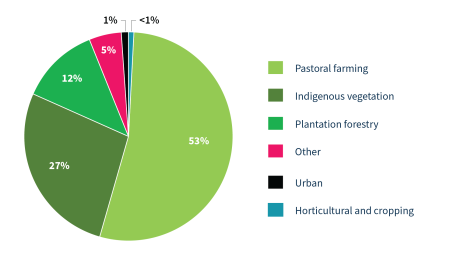
The main land use types in the Waikato region
“From the decline of Mesopotamia in the middle east to the hardships of the Dustbowl in 1930s America, history reminds us time and again that thriving societies depend on healthy, well managed soils.
“They’re vital to our economic and social wellbeing, not to mention the health of the environment, so it’s essential we use them wisely. And it’s for these reasons that Waikato Regional Council monitors soil health.”
The council has 150 soil quality monitoring sites across the region, and measures nutrients, soil structure and trace elements.
“Key indicators like macroporosity – ‘macropores’ being the gaps in the soil which allow air and water to readily move through it – give us an indication of how well plants might grow, among other things,” says Haydon. “If the macroporosity drops below 10 per cent of the total pore volume, we would expect that plant growth may be impeded.
“This work enables us to monitor trends and acts as a warning system that lets us know if something is going wrong. The information can then be shared with communities and relayed to policy staff and decision makers so decisions can be made about whether policy adjustments are required.”
In the Waikato, as is the case the world over, good soil is necessary for sustainable food production and the jobs that depend on it. Agriculture is the largest sector of New Zealand’s tradeable economy, generating $58.4 billion in annual export revenue, representing 70 per cent of its merchandise exports and employing tens of thousands of people. And, at present, the country produces around eight times more food than it needs to feed its population.
“With all the food we produce, it’s easy to be complacent, thinking that we have an endless abundance of versatile land and healthy soils for agriculture,” says Haydon, “but this isn’t actually the case.
“Our most versatile land – which we consider to be Land Use Capability classes 1 and 2 – is relatively scarce and finite, representing only about 12 per cent of the region.
“Some impacts, such as severe erosion or loss through urban expansion are irreversible, so we must make smart use of the land we have and safeguard our most productive soils.”
Other major challenges include organic matter loss, excess nutrients and compaction under intensive uses. Low-lying land can become waterlogged, requiring drainage and ongoing maintenance, while hilly land and ‘light’ volcanic soils are vulnerable to erosion.
“Over time, soil health issues can reduce our capacity to grow crops and sustain good pasture to feed animals.”
Waikato Regional Council Principal Economist Blair Keenan says the strength and value of primary industries in the Waikato region is one of the reasons it’s so important to look after our soils.
Pastoral farming creates an abundance of key exports like meat and milk powder but also a level of reliance on agriculture for jobs. In turn, this results in New Zealand having a higher level of reliance on good soil quality than countries with more diversified economies. “Our dependence on these land-based exports is critical for our foreign exchange earnings, but that also makes our exposure to a narrow range of products and markets significant,” says Blair.
“Vigilance and the encouragement of good practices is essential to help ensure soil health doesn’t end up becoming an Achilles’ heel for us, economically. “We want to ensure the land can continue to sustain those here now and generations to come. As the whakataukī goes: manaaki whenua, manaaki tāngata, haere whakamua. If we take care of the land and take care of the people, we take care of the future.”
Find out more about the work we do to help look after the whenua on our land and soil pages.