
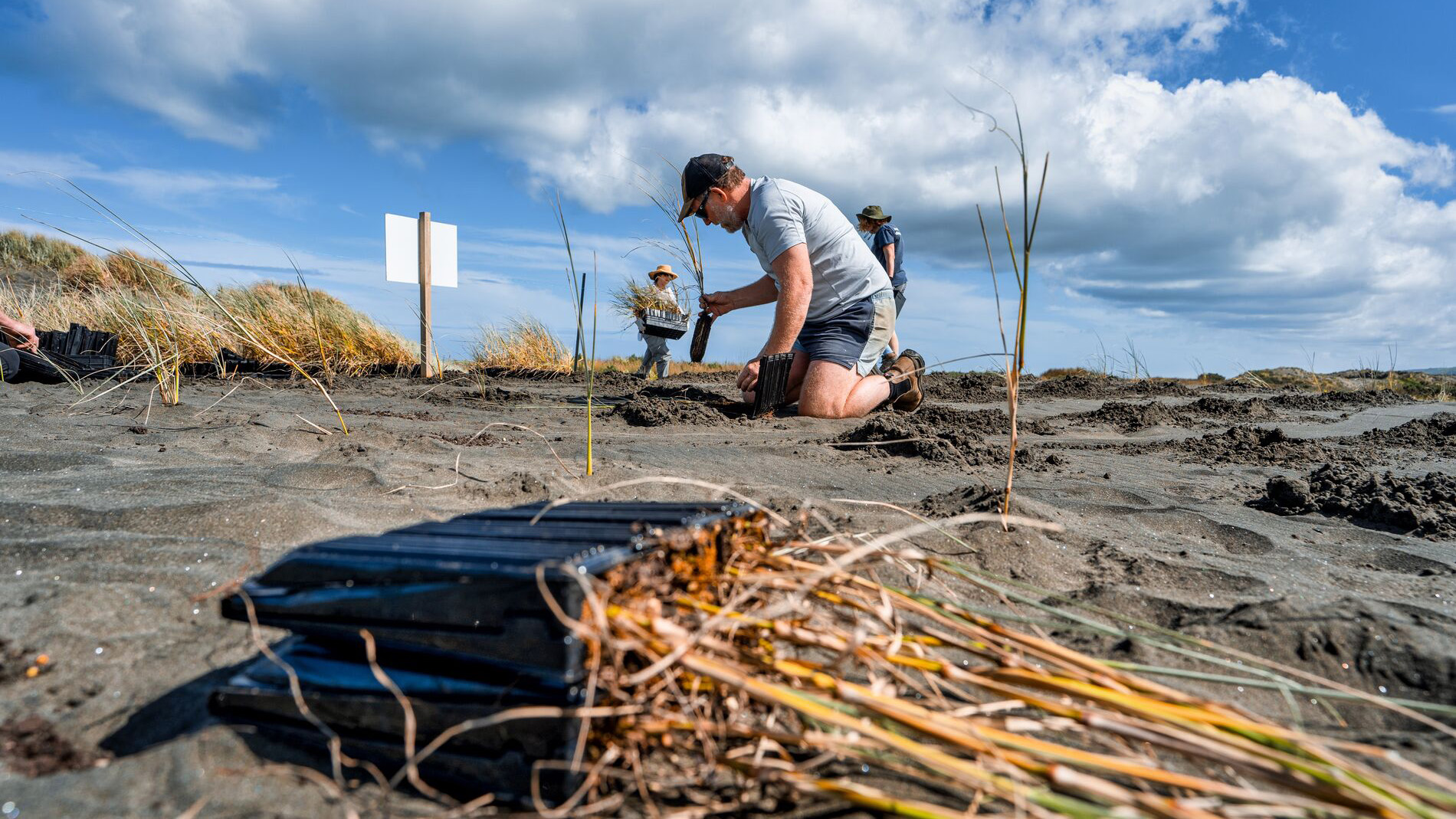
Coastcare Waikato is a community partnership programme to restore coastal areas. The programme involves local communities, school groups, iwi and government organisations all working together to protect and look after our coasts and all the species that live and grow here. There are about 24 Coastcare groups protecting coastlines across the Waikato, with many committed and passionate members. To celebrate their efforts in 2025, we’re putting the spotlight on three Coastcare champions who go above and beyond in Kawhia, Whitianga and Whangamatā.
You can also find out what our Coastcare groups have been up this year by checking out our Coastcare Waikato StoryMap.
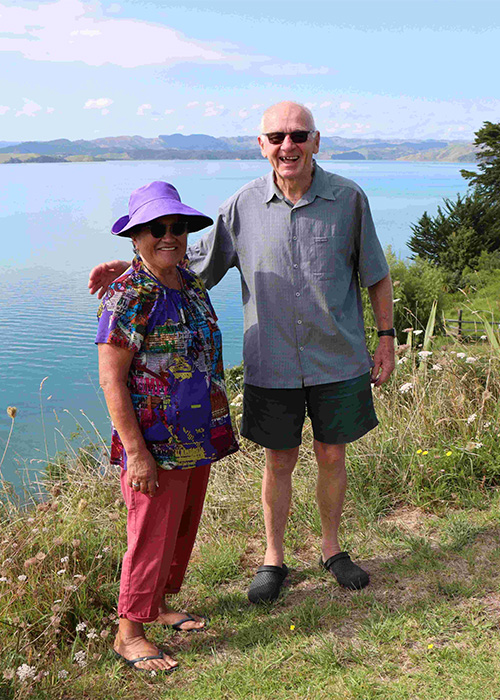
Ray Montgomery (Monty), Kāwhia
How long have you been volunteering and what motivated you to get involved?
I first started doing volunteer work to restore the Kāwhia coast around five years ago.
A friend of mine invited me along to a planting bee at Tom French Grove, where I got hooked!
I met Horahaere Scott there and she pulled me into helping Onepu Trust, which does a lot to care for the coast around here – she was a big motivator in getting involved in this work.
I’d previously done a bit of work in the army, removing wildling pines, so I had a good idea of the impact of weeds on an environment. When I moved to Kāwhia to retire, I was looking to connect with the community and keep busy – this work does that in buckets!
What exactly do you do and how much of your time and effort does it take?
I do a bit of everything! I’m never bored I’ll tell yah that. I’ve been the ‘righthand man’ for Stacey (the Coastcare-Waikato West Coast Coordinator) and have travelled all over the west coast to dig in at Coastcare events. I got the bug for the auger at one of the early planting bees and since then, you can’t keep me off it. Stacey calls me the “number one digger operator” at Coastcare planting bees. Over the years, I’ve also helped with releasing plantings, worked at the Kāwhia Native Plant Nursery supported Onepu Trust, maintained plantings on Te Ahurei at Maketu Marae and am coordinating work at Kaora Street, one of Te Taiao o Kāwhia Moana’s restoration projects.
This work is pretty seasonal, but there’s always something to do. It probably works at around one day per fortnight over the year. It’s not easy work but I love it!
What have been the biggest wins for you?
Being part of key Coastcare projects like planting Te Ahurei at Maketu Marae and the huge-scale work at Nukuhakari have both been special experiences. It’s so good to see how our work can change a landscape over time.
What are the biggest challenges that come with the job?
I can’t think of any. Got good bosses ;)
What message would you like to share with people heading to the beach this summer?
Leaving vehicles in the car park is best when you go to the beach. But if you have to take your vehicle out there, don’t get stuck! Take care of birds and shellfish beds. Here in Kāwhia, the tides will trap you if you don’t time it right – too many vehicles have polluted our ocean. We can care for our coasts together.
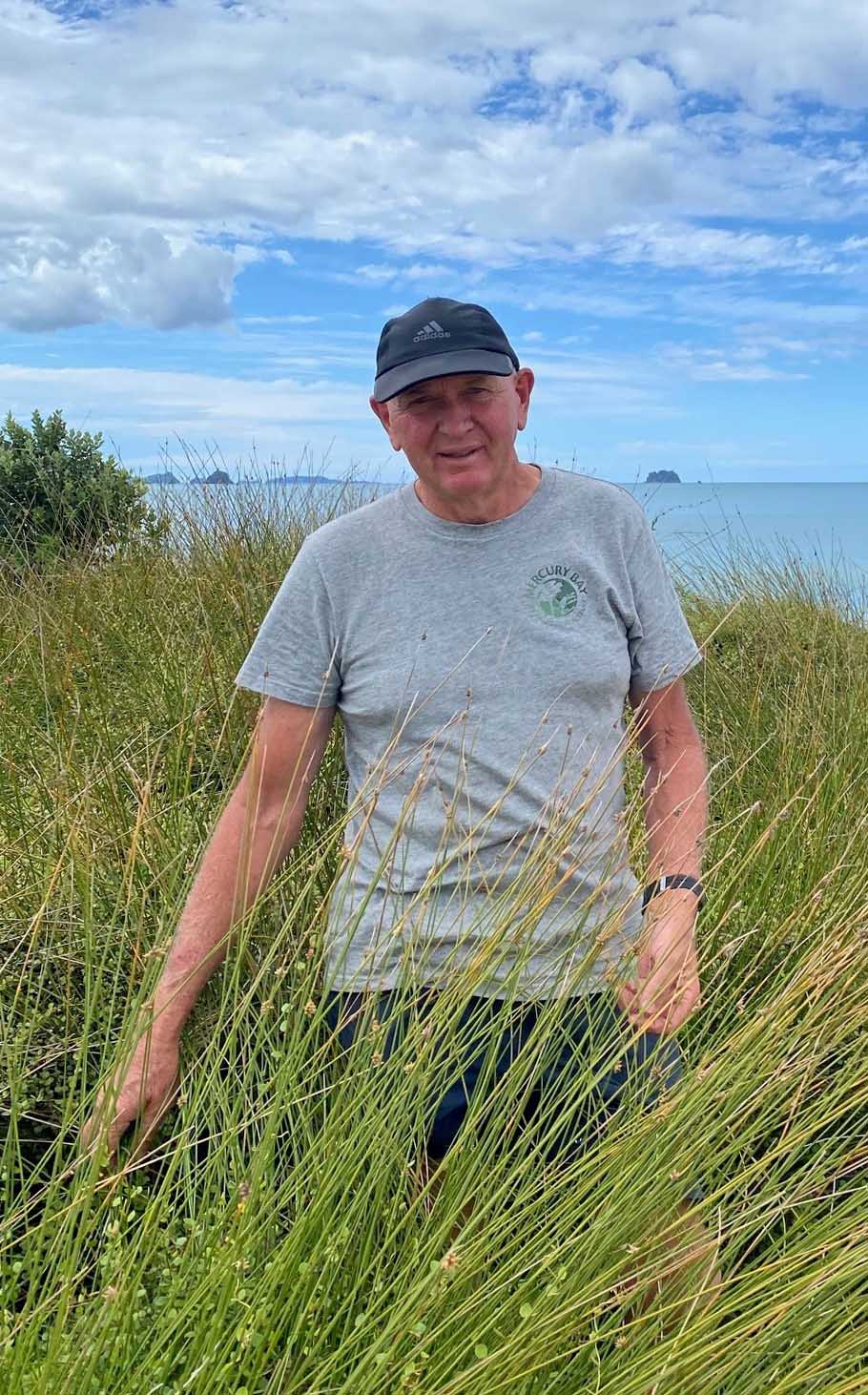
Kim Lawry, Whitianga
How long have you been volunteering, and what motivated you to get involved?
I have been volunteering in this work for 13 plus years, starting with international students who were attending a local English Language school. This evolved into working with local volunteers.
I care about our sand dunes, our native plants and native birds, and didn’t think there was enough happening to protect them – without people being prepared to volunteer their time.
What exactly do you do, and how much of your time and effort does it take?
I’m involved in the Mercury Bay Environmental Trust, specifically running their native plant nursery; and also the Backdrop Trust. I do around 30 hours a week. A lot of the effort is in facilitating other volunteers to contribute their time to the same causes.
What have been the biggest wins for you?
The establishment of the nursery and how fast it has grown. Being able to see the plants that we grow planted back into our area. Seeing the difference and results from the effort of the trust and the community volunteers all over the wider Mercury Bay area.
What are the biggest challenges that come with the job?
I think the biggest challenge is that we rely heavily on volunteers. The volunteers are getting older. It’s harder to get the younger generation involved, and to get new blood at the volunteer events. We need numbers, particularly in the dunes, so we can make the progress we need to in order to make a real difference.
What message would you like to share with people heading to the beach this summer?
Our beaches are evolving environments, and they need care and attention. We need effective dunes to help our beaches recover from storm events. If we don’t give the dunes the attention they need, then the beaches won’t be available in the form they are now in the future, for the benefit of our grandchildren.
We always see numerous people using and enjoying the beachfront as we run our working bees to keep the dunes thriving, and while we often invite these people to come along and join us, it is difficult to get new helpers to actually turn up to do their bit.
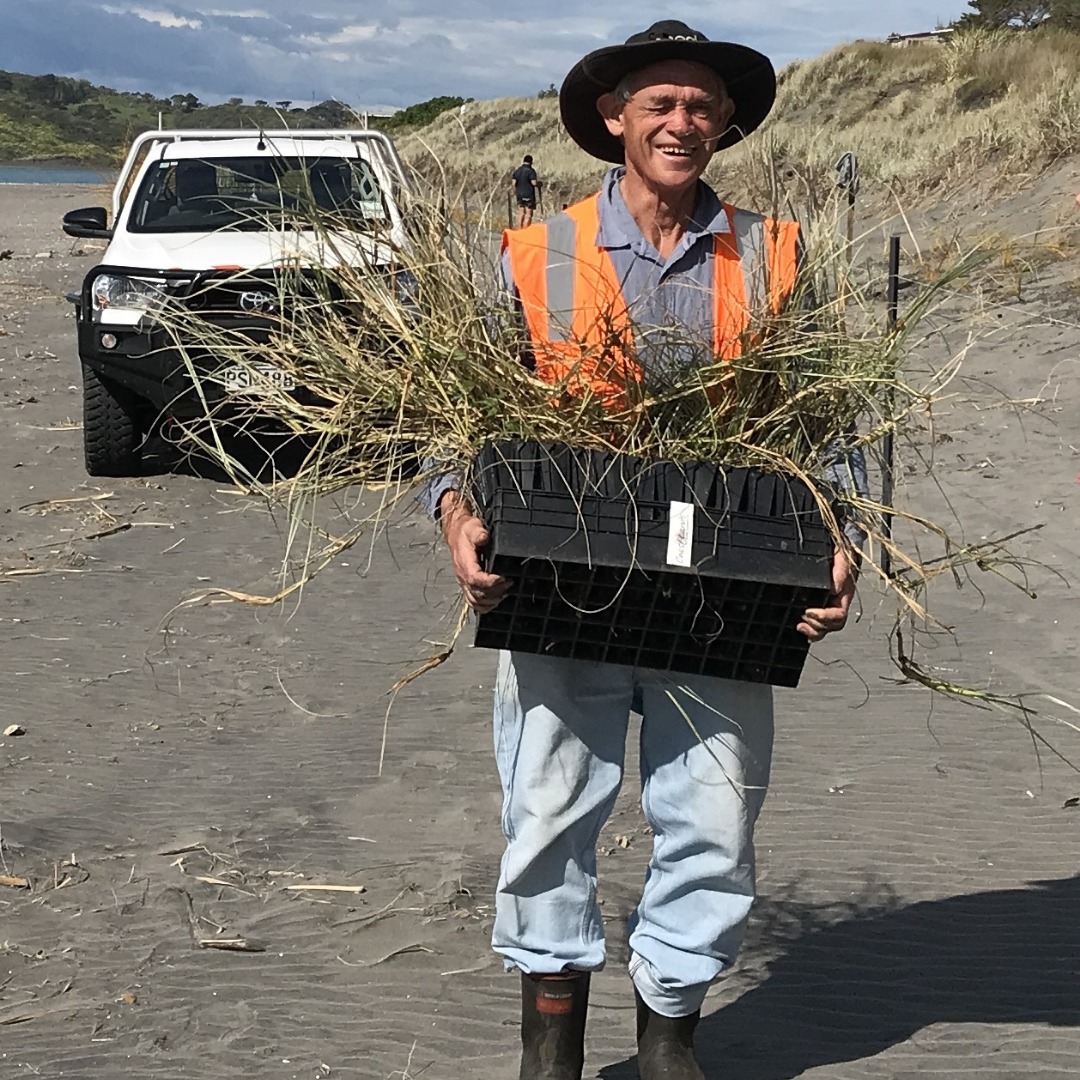
Alan Greensill, Whāingaroa/Raglan
How long have you been volunteering, and what motivated you to get involved?
I have worked alongside my wife Angeline for most of our married life. She is mana whenua here in Whāingaroa, so this place and this coastline are part of who she is. Being based here more permanently over the last couple of decades has really deepened that connection for me, too. There is a strong cultural relationship between the land and the sea here. Looking after one means caring for the other. I guess my motivation comes from wanting to protect these spaces for the future and to do my part quietly, in a practical way.
What exactly do you do, and how much of your time and effort does it take?
We live right by the beach, so I am out there almost every day. It might just be a walk, or it might involve picking up rubbish, fixing a sign, sorting fencing, or checking on plantings. I am always there at planting days and during seed collection season, and I help look after the coastal nursery and the native coastal species we grow. It is not one big job, it is lots of small, steady jobs that add up over time. It is just part of daily life now.
What have been the biggest wins for you?
Seeing dunes that were once badly eroded now rebuilt and supporting natural coastal cycles has been one of the biggest rewards. Watching native plants establish and spread, and seeing areas recover that were once bare, makes all the effort worth it. These visible changes over time show that consistent care does make a difference.
What are the biggest challenges that come with the job?
Rubbish is a constant issue. Damage from people riding horses, motorbikes, or playing on fragile dunes also causes long term problems. A lot of it comes down to behaviour. Sometimes, it feels like bylaws and better enforcement are needed to protect these areas properly. Education helps, but there are still ongoing pressures from how people use the space.
What message would you like to share with people heading to the beach this summer?
Take home what you bring with you. Your behaviour really does impact these places. Respect the beach. We all need to look after it together. Every individual sets an example for the next person and for the next generation, too.
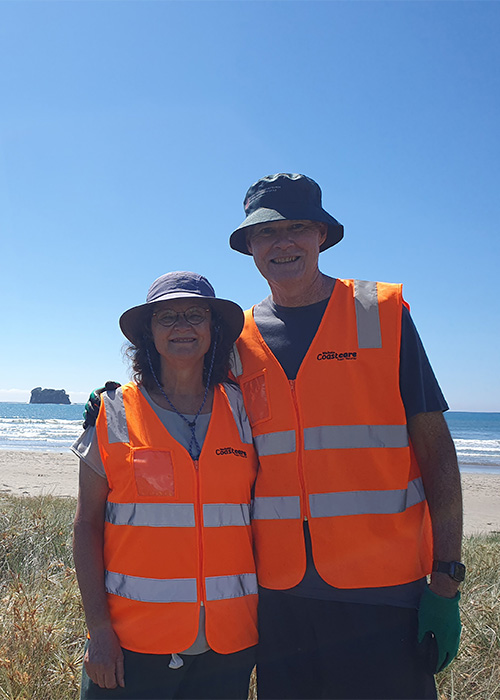
David Glenn and Jane Glenn Gower, Whangamatā
How long have you been volunteering and what motivated you to get involved?
After the storms of 2023, and the devasting effect on the Whangamatā beach, we wanted to assist in the recovery.
What exactly do you do and how much of your time and effort does it take?
We linked up with like-minded individuals and helped establish the Whangamatā Dune Protection Society to work alongside Coastcare. Initially it was all about dune repair and planting; now – two years later – maintenance is also a major factor, along with supporting the structure of the society. Given we live at the beach, we view the dune as our “baby”, and we are constantly looking out for it!
What have been the biggest wins for you?
A most beautiful and resilient dune for all to enjoy.
What are the biggest challenges that come with the job?
Keeping people motivated to continue volunteering. Planting feels productive; weeding feels like a chore!
What message would you like to share with people heading to Whangamatā beach this summer?
Encouraging everyone to support the dunes in their recovery, whether it be volunteering for weeding days, joining our society or just being respectful of this still young and developing ecosystem whilst it re-establishes itself.