
“We really appreciate getting any new leads from the public as they help us to build a picture of rook activity and rook numbers throughout the region.”
- Imre Reuter-Rosewood, Biosecurity Officer

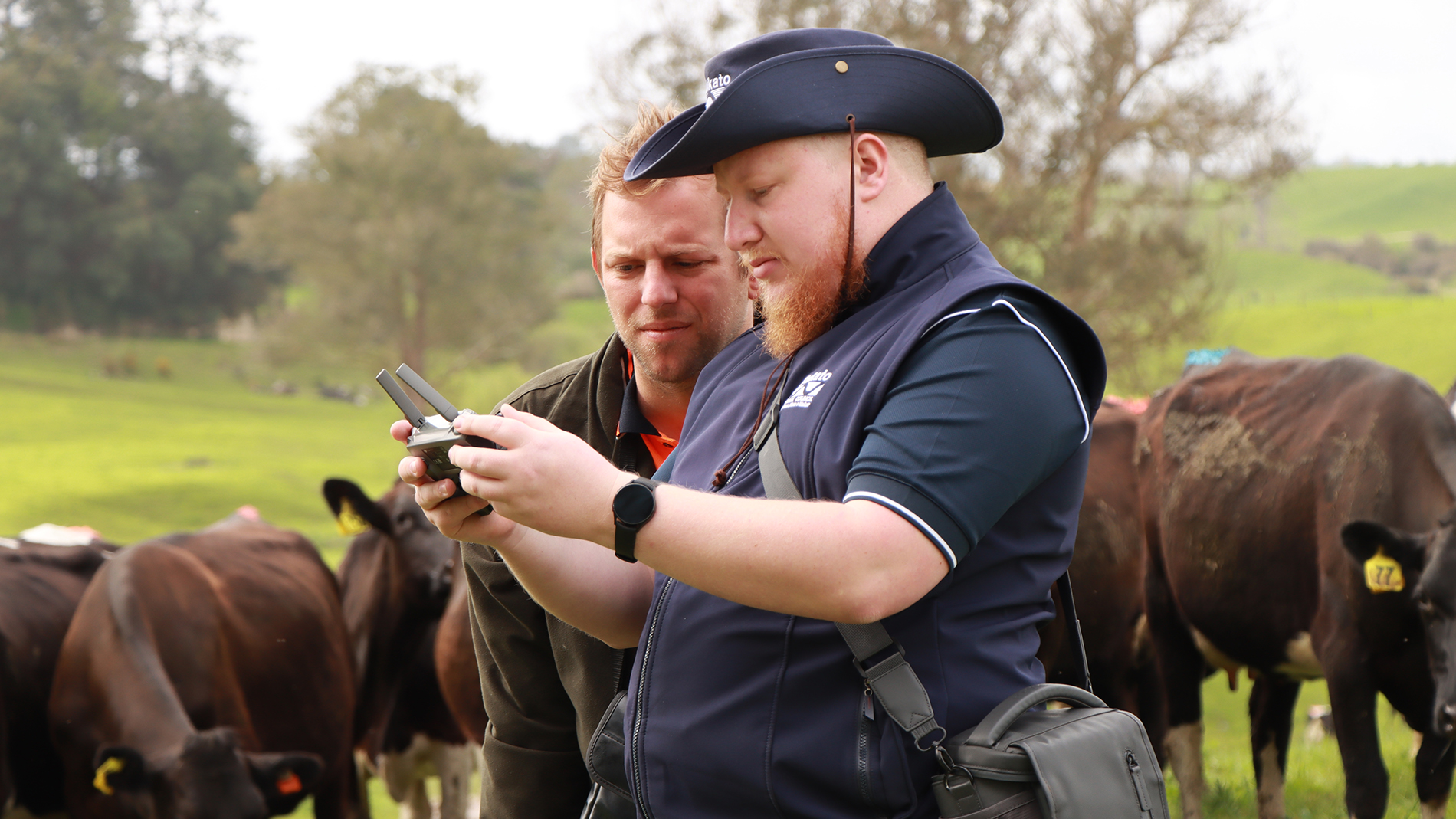
Waikato Regional Council’s Imre Reuter-Rosewood and Timothy Beale with some of the tools used in rook surveillance
Waikato Regional Council is deploying drone technology in the fight against rooks – an introduced pest bird known to damage crops and pasture.
With rook breeding season well underway, the public are being asked to report any sightings of the avian pests, who are usually found in rural areas.
Rooks breed from early September until mid-December, generally building their nests high up in pine or gum trees. If left uncontrolled, they can form large breeding colonies, or rookeries, of several hundred birds. The largest colony ever found in New Zealand had nearly 1000 nests.
These large, glossy black birds – native to Great Britain and Europe – were introduced to New Zealand in the 1860s to control insect pests. Unfortunately, rooks have turned out to be a pest themselves, with the potential to threaten our region’s farmland.
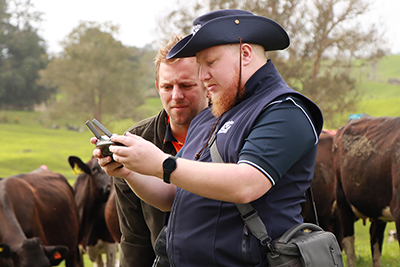
Imre and Timothy monitoring drone video of a rookery on farmland near Tirau
Rooks are a pest because they are known to feed on and damage newly sown crops, or cereal crops at any stage of growth. They can also damage pasture by tearing it up during their search for grubs, exposing bare soil to erosion and encouraging weed germination. Rooks can also damage silage by tearing holes in the plastic wrapping, depriving farm animals of their feed.
“We are currently doing surveillance to locate rook nests in the Waikato, during their breeding season, so that targeted control can be carried out,” says Waikato Regional Council Biosecurity Officer – Pest Animals, Imre Reuter-Rosewood.
“The birds are very mobile and could potentially be found anywhere in the Waikato, so we focus on nesting locations, where they tend to congregate.
“The current rook hotspot areas we are aware of all lie between Paeroa and Taupō, in particular around Mangakino, Whakamaru, Tīrau and Ōkoroire. We are visiting all these areas as part of this year’s rook surveillance.”
So far this Spring there have been 24 confirmed rook sightings, similar to the numbers identified last year.
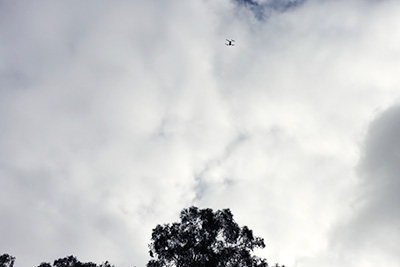
Timothy moves the drone into position above two rook nests which are located in the tree-tops
“We really appreciate getting any new leads from the public as they help us to build a picture of rook activity and rook numbers throughout the region. The information helps us to focus our efforts.
“It’s important that landowners don’t try to control the birds themselves, as this can scare them away, creating additional work for us to locate them again.”
Imre says rural landowners and occupiers in the Waikato region are encouraged to contact the Waikato Regional Council about any rook activity they spot by calling 0800 800 401.
While binoculars and plenty of patience are standard surveillance tools for Imre, when rook nests are pinpointed, he will often bring along a colleague who pilots a small drone. Views from the drone camera allow him to confirm nesting activity, or that subsequent control has been successful.
“For a rookery identified outside of Tīrau this spring, we got a really good look at the nests from the drone and after control didn’t find any further sign of rook activity” says Imre, who plans to carry out more surveillance, just to make sure those rooks don’t nest there again.
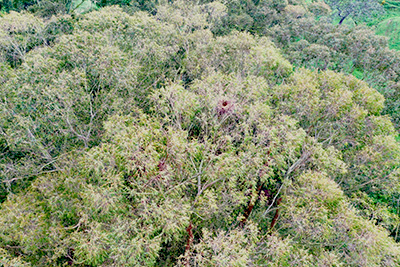
Drone’s-eye view of two rook nests in the tree-tops – can you spot the nests?
Rooks are known to nest again if their first attempts fail in favorable conditions, sometimes building two nesting sites up to 2km away at the same time.
There are other rookeries identified this year, further south towards Taupō, and control is eminent at one site where 10 rooks have been building multiple nests. This is the largest rookery found in the region for some years.
While most rook sightings are in rural areas, at least one rookery with three rooks is located in Paeroa, an urban location that makes control difficult. In Hamilton – where there have been no confirmed rook sightings for the past four years – two old males are believed to still be present.
Imre says the council is making good progress with its rook control efforts, with fewer than 50 rooks thought to remain in the Waikato region compared to the hundreds that were present in the past.
“Due to the potential economic cost rooks can have on farming production, the aim of rook control is very much focused on eradication,” says Imre, who notes that if rooks went unchecked, the numbers would grow quickly and their impacts would be significant, “Rooks are one pest animal that we can eradicate and be done with so we can focus on other biosecurity threats to biodiversity and primary production”.
“What we are dealing with now in the Waikato are the last remnants of the rook population.”
To report a rook sighting call 0800 800 401.